THE ∆RTI/ST
I was born in Naples and I still don't know if that's a short circuit or a superpower. Probably both, which is more or less the foundation of everything I make.
I ended up in Leeds at nineteen, running away from a degree in Business Economics that I never asked for. I spent eight years in England. I was in a band — I sang, wrote the lyrics, performed. I worked as a waiter, which turned out to be one of the best educations I ever had: watching people eat, observing how they behave in social rituals, reading bodies and dynamics across tables — it was an accidental course in anthropology, sociology, psychology. You learn more about human nature serving food than in most classrooms.
The rave scene, the warehouse parties, the underground — that world shaped how I move, how I think, how I make things. That energy is in the work. The chaos, the physicality, the disregard for clean surfaces and comfortable experiences.
I went to art school and slowly understood that the thing I wanted to do with my life was make images that break things — as a way of seeing more clearly.
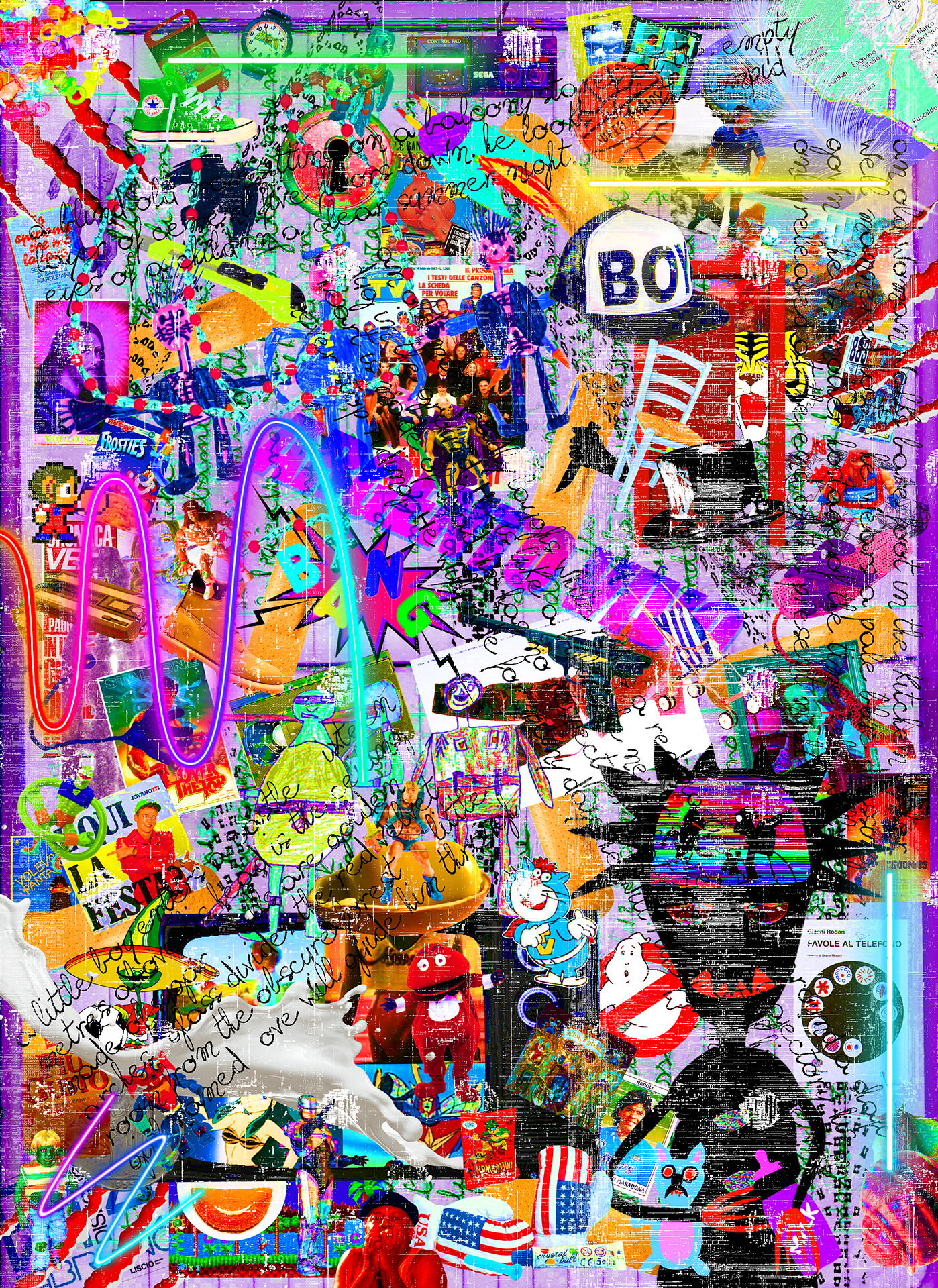
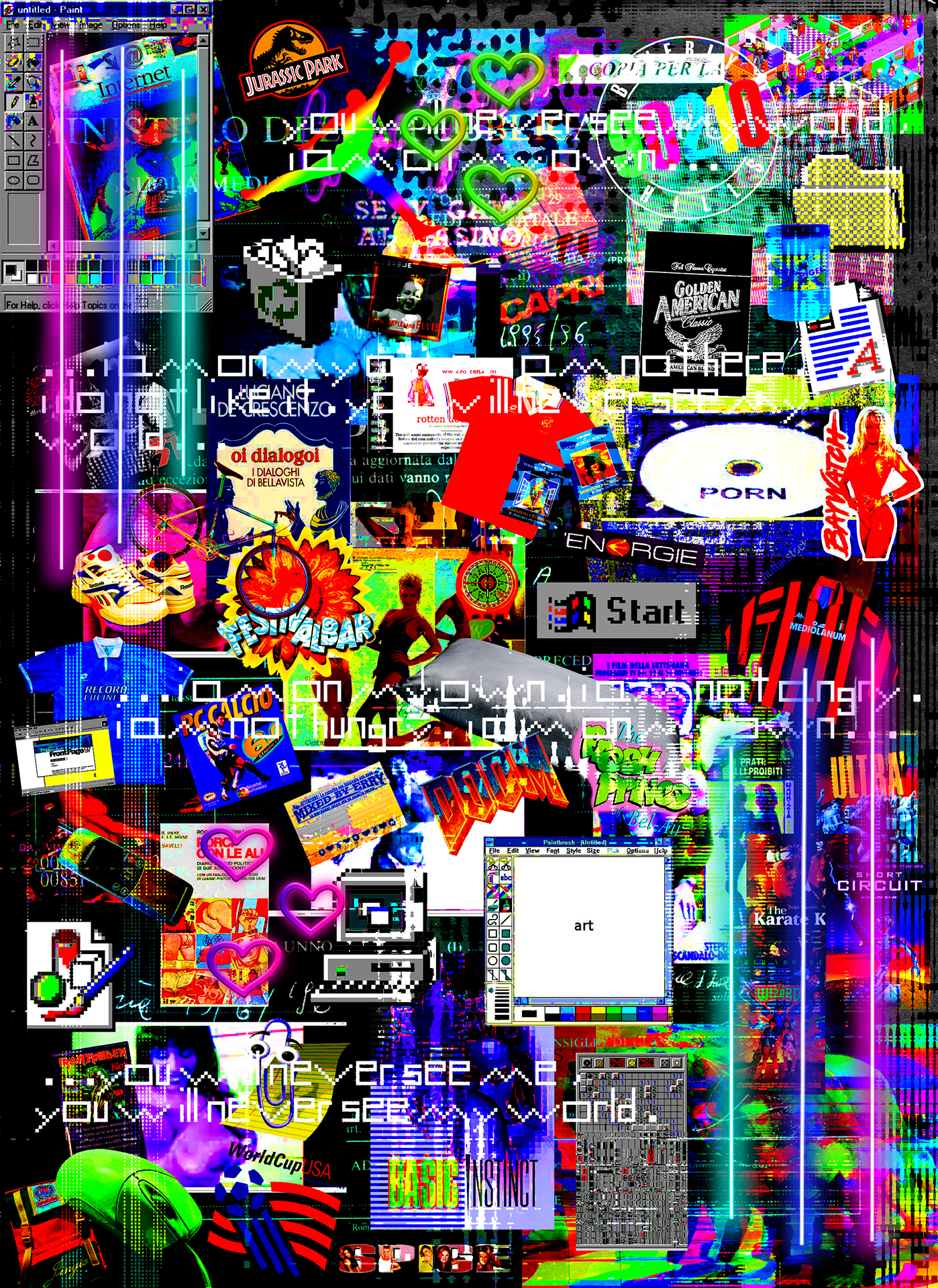
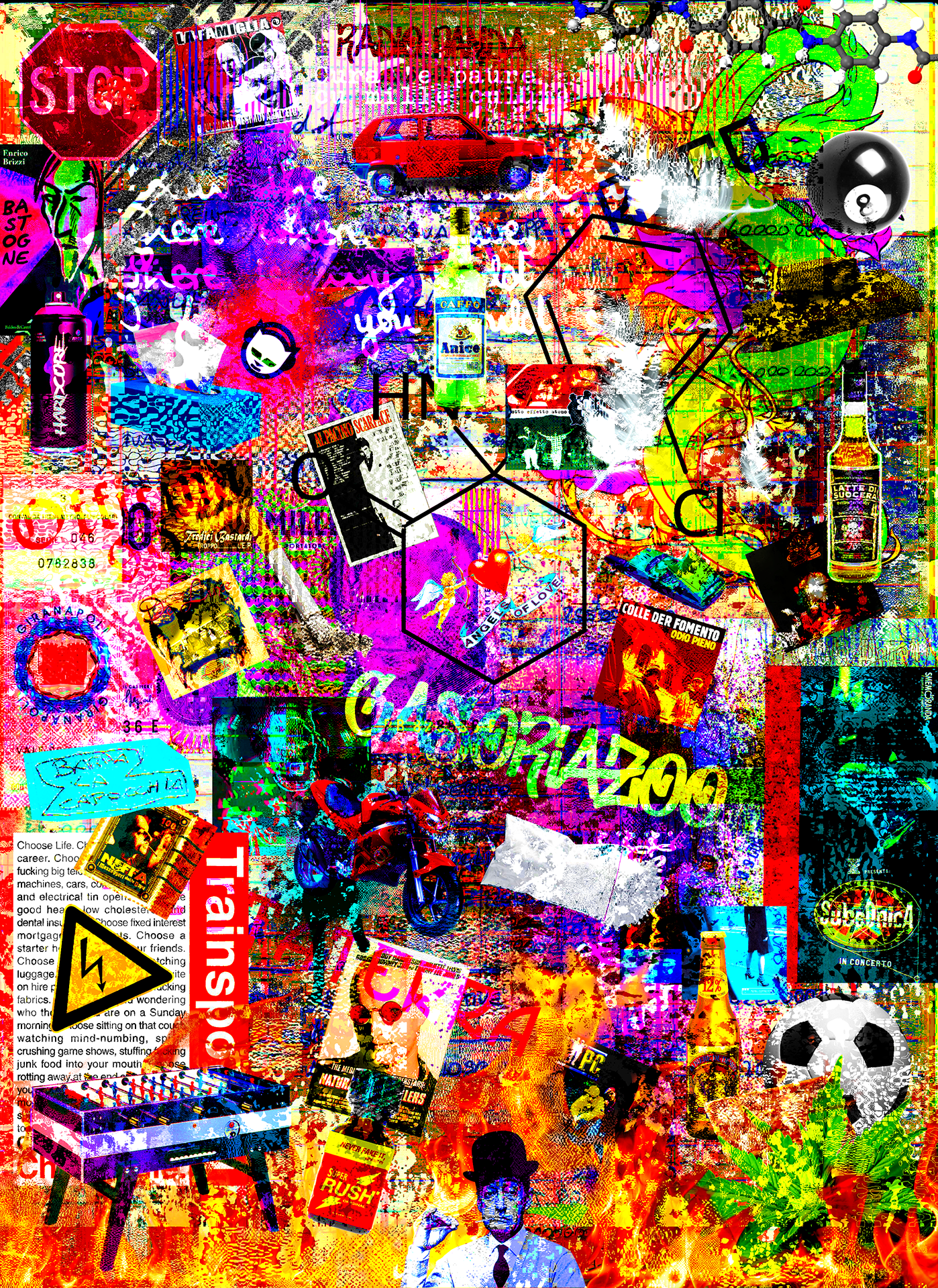
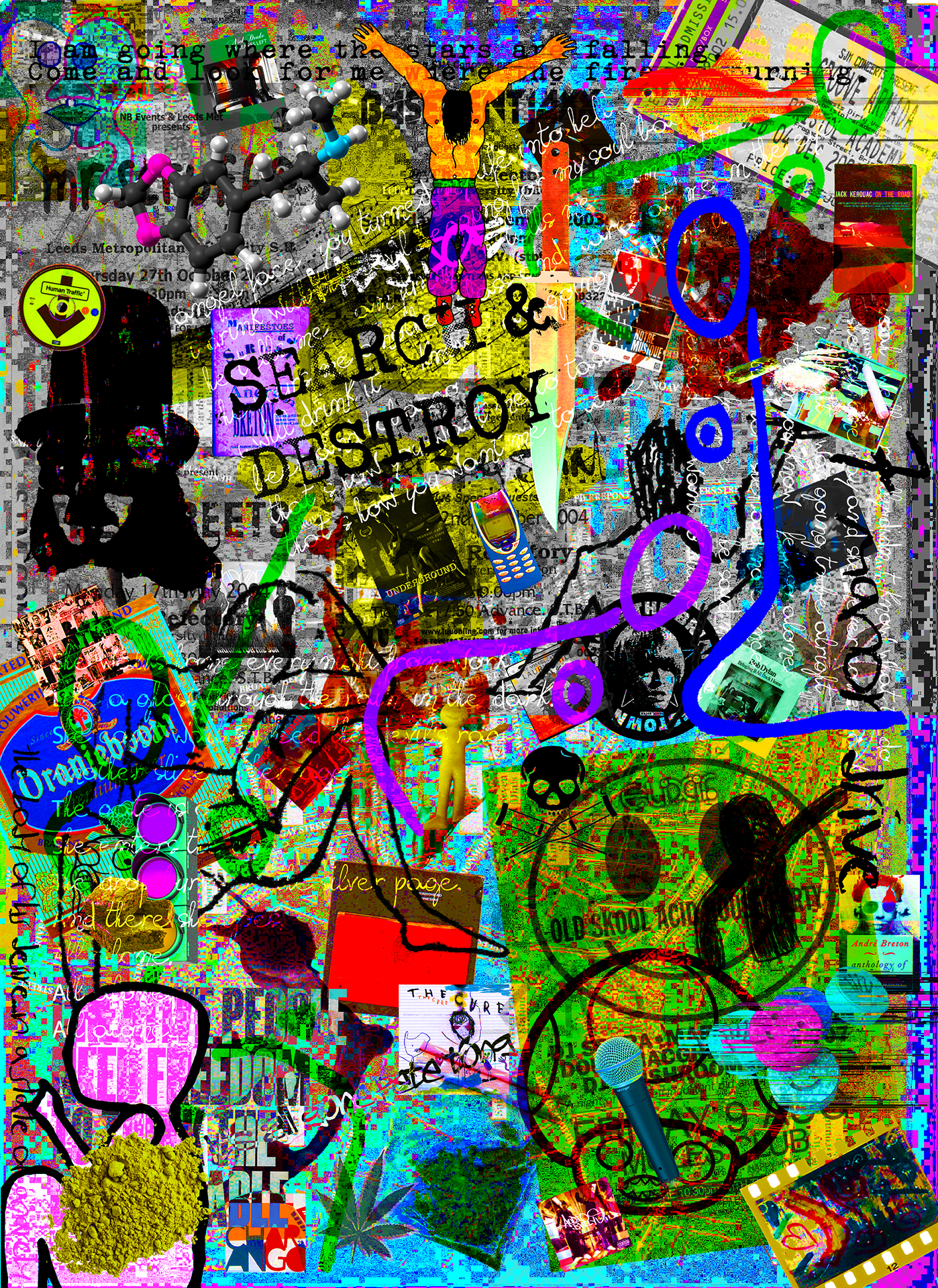
I work with glitch. Databending, pixel sorting, generative scripts, AI, mixed media painting, gel plate printing, cyanotype, video. I do the wrong things the right way. It's a method. I take images that were built to perform a certain idea of beauty, of the body, of identity, and I corrupt them until something truer comes out of the wreckage.
My work lives inside DISØRDIN∆RY BÆUTY — a research project, an obsession, a universe of broken images and uncomfortable bodies. The thorn sense of beauty. Everything I make comes back to the same wound: what beauty costs, who it excludes, and what survives when the standard collapses.
I have rheumatoid arthritis. My body is a permanent negotiation. That's not incidental to the work — it's in the work, everywhere.
I live between Naples and Malta.
Domenico Barra is a multimedia artist working across glitch art, artificial intelligence, mixed media painting, printing, and video. Born in Naples, Italy, he has developed a practice rooted in the aesthetic and critical potential of machine failure — the glitch as both method and argument.
His work engages with the contested representation of the human body, challenging the beauty standards propagated by social media, the beauty industry, and AI systems trained on their logic. Through databending, pixel sorting, and generative scripts, Barra corrupts images at the level of their data and pixel structure, transforming curated depictions of perfection into fragmented, anonymous figures that resist the systems that produced them.
Since 2018, this research has evolved into DISØRDIN∆RY BÆUTY — DIS/verse, an expanding body of work comprising eleven projects across image, video, mixed media, and browser-based tools. The project operates as a counternarrative to toxic beauty ideals, advocating for radical inclusivity and a conception of beauty that does not flinch at imperfection, pain, or ambiguity.
Barra's work has been exhibited internationally at DAM Gallery Berlin, Galerie Charlot Paris, Media Center New York, Digital Art Center Taipei, Central Academy of Fine Arts Beijing, and the State Hermitage Museum, among others. He has participated in The Wrong Biennale and the World Intellectual Property Organization's digital art programme, and directed Italy's first glitch art group exhibition, Tactical Glitches, curated by Rosa Menkman and Nick Briz. His work has been featured in Flash Art, Motherboard, Hyperallergic, and Digicult, and is included in the second volume of the Italian Ministry of Foreign Affairs' publication on art and technology.
He has delivered workshops on glitch art and dirty new media at RUFA — Rome University of Fine Art, and lectures at the School of the Art Institute of Chicago, MACRO Rome, and numerous international institutions.
∆RTI/ST STATEMENT
The glitch is not an accident. It is a position.
I work with images that were built to perform — to perform beauty, to perform the body, to perform an idea of what existence should look like when it's been optimised, filtered, and approved for consumption. I take those images and I corrupt them. At the level of the data. At the level of the pixel. DNA and skin — what the image hides beneath its surface and what it insists on showing. The visceral and the superficial. The structure and the wound.
I run them through wrong software, wrong formats, wrong processes until what they were built to hide becomes the only thing visible.
This is the territory of DISØRDIN∆RY BÆUTY — DIS/verse. A research that spans glitch art, artificial intelligence, mixed media painting, printing, and video. Eleven projects, one wound: the relationship between beauty, the body, and the systems that decide what both are allowed to be.
This is a counternarrative. Against the tide. Against the aesthetics of compliance and the tyranny of the standard. The atypical, the anomalous, the excluded — these are not failures to be corrected. They are the material. The redemption of the weird, the reclaiming of what the algorithm deletes, the insistence that imperfection is not a problem to be solved but a truth to be inhabited.
The body is the subject that keeps returning. My own body — living with rheumatoid arthritis, existing in permanent negotiation with its own limits — taught me that the body is never the clean, optimised surface that images insist on. It carries damage, accumulates history, breaks down and continues. Pain is not a malfunction. It is information. The work takes that information seriously.
The aesthetic comes from the same place as the argument. The rave, the warehouse, the underground. The energy of spaces that refused comfort and produced something more alive for the refusal. Clean surfaces are a lie. The anomaly is where things actually happen.
Counterculture as method. The thorn sense of beauty as result.