F0T0GƏN/∆
Photogénie. A word French film criticism turned into a theory around 1920: the quality some faces have of becoming more when they pass into the image. The camera's preference. Its bias. Its hierarchy.
F0T0GƏN/∆ takes that preference apart.
The subjects in this work were never photographed. They were generated — by an AI trained on millions of images that already encoded every photographic convention the work wants to question. What a face should look like. What deviation from that looks like. What the camera finds by default. The synthetic subject carries all the assumptions of its training data and cannot escape them. Neither can we.
This is post-photography. Images that carry every sign of a photograph — light, grain, skin, a moment — without anyone ever standing in front of a lens. The photograph promised proof that something had been there. The generated image keeps the form of that promise and empties it.
Vitiligo. Alopecia. Asymmetry. Scars. Facial modifications. Genetics that refuse to resolve into readable categories. The camera's preference is put under pressure — not to produce beauty, but to reveal the mechanism that decides what beauty is.
This is post-reality. The question is no longer whether an image is true, but what it does once it is believed. A photograph was proof of existence. Identity without a person. Identification without a body to identify. In the realm of performance, where everything is staged, the fake is just another proof — another version of a possible reality. An apparent body that claims to be seen. And the public is here to watch. Representation with nothing behind it to represent. Simulation no longer imitates the real; it competes with it — and often wins. In the society of the spectacle, reality doesn't really matter.
Then the glitch. In an image that was never a photograph, the error should be the giveaway: the seam where the synthetic shows through. It does the opposite. A broken pixel, a shifted block, a corrupted file are the marks of a real object — something stored, compressed, damaged, passed from hand to hand. The glitch gives the synthetic a history. A trace of something that happened. An event, recorded. It does not expose the simulation. It adds to reality. It brings it to life. A face that never existed acquires the one thing the generator could not give it: a wound. The pixels bleed. The subjects breathe.
F0T0GƏN/∆ is the reverse of BÆUTY IS CH∆ØS. There, real people performed for the camera — the pose, the light, the filter — real bodies ultra-processed to the point of becoming almost synthetic, and the glitch erased the performance until no one was left. Here, no one was ever there: synthetic bodies processed to the point of becoming almost real, and the glitch is what makes them present, protagonists, perceived, subliminally, as one of us.
The texts are not explanation. They are the entry wound. They do not answer. They feed on doubt — the only honest response to an image that pretends to be true. Longer texts are published on the DISØRDIN∆RY BÆUTY blog.
THE APPARENT BODY
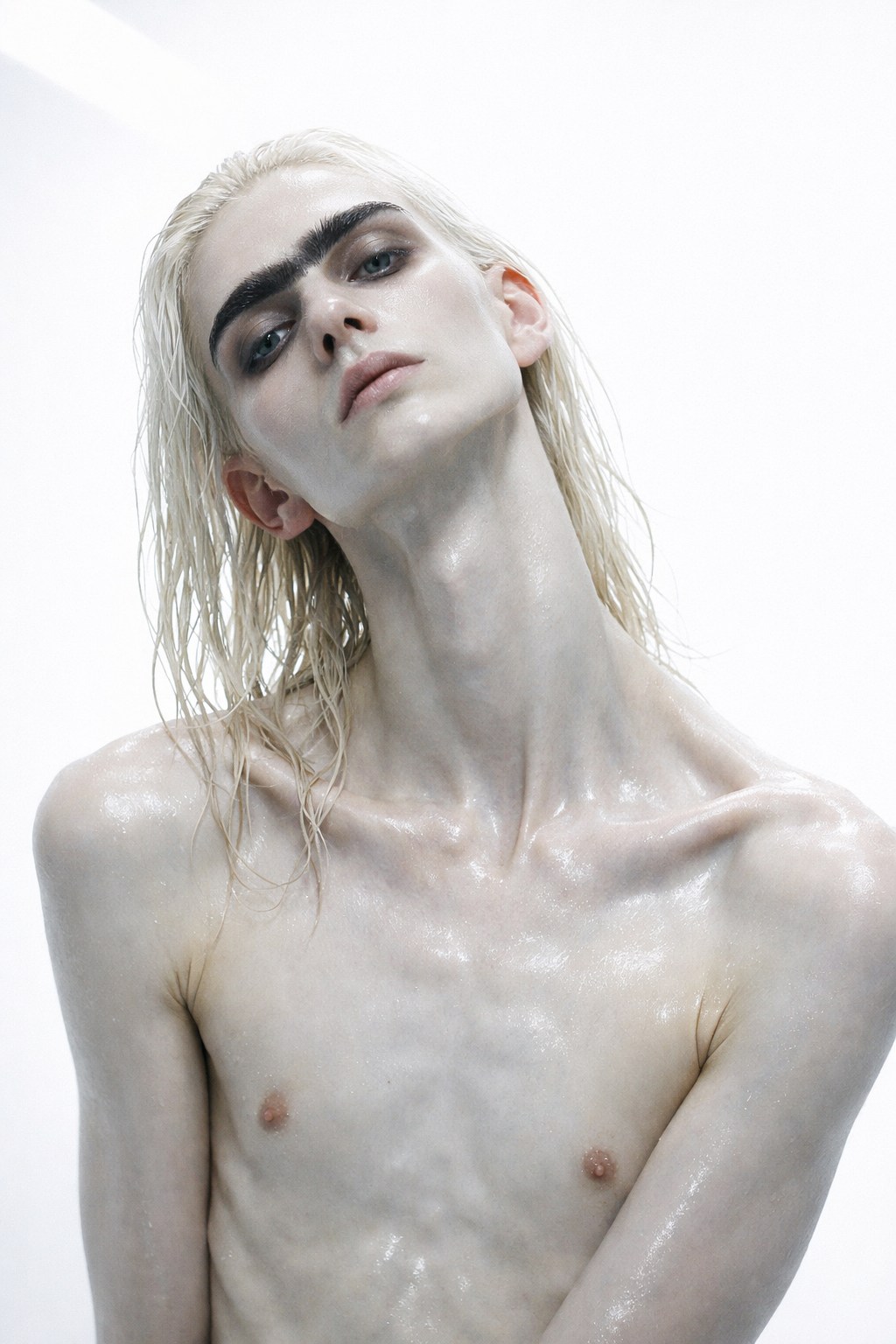
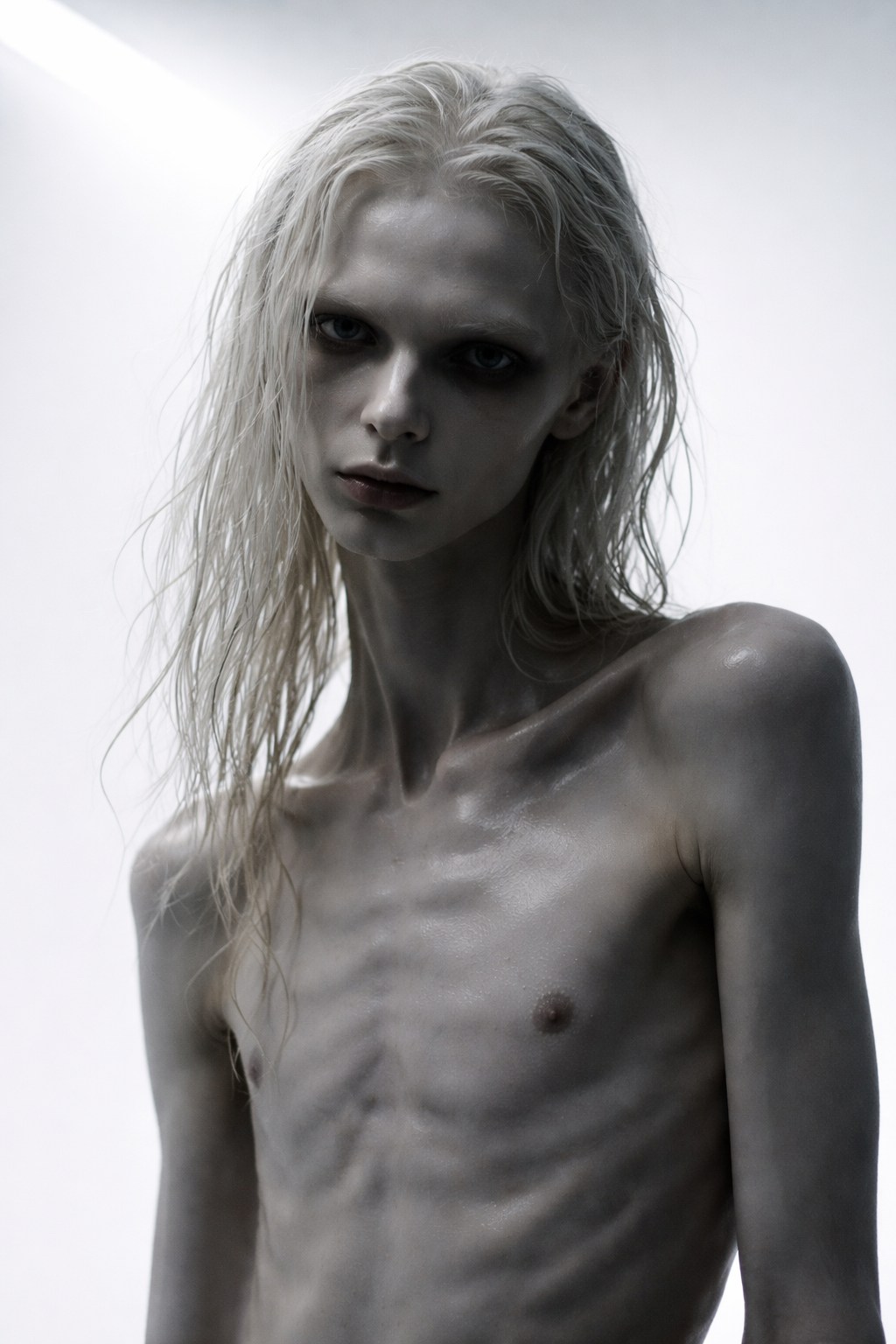
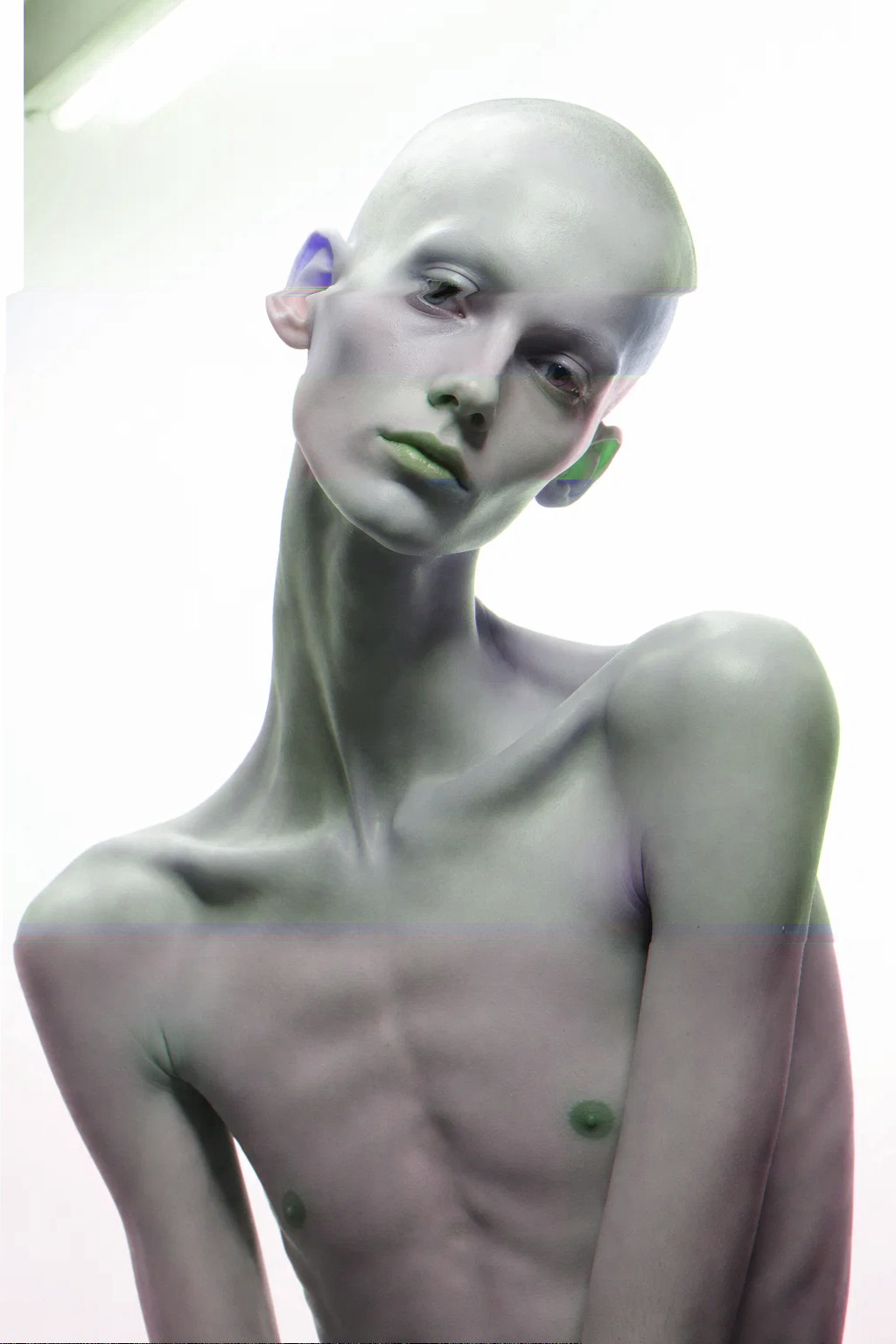
The photograph made one promise: this was here, in front of the lens. The certificate was issued. No one was there to sign it.
THE SYNTHETIC PHOTOGRAPHIC GESTURE
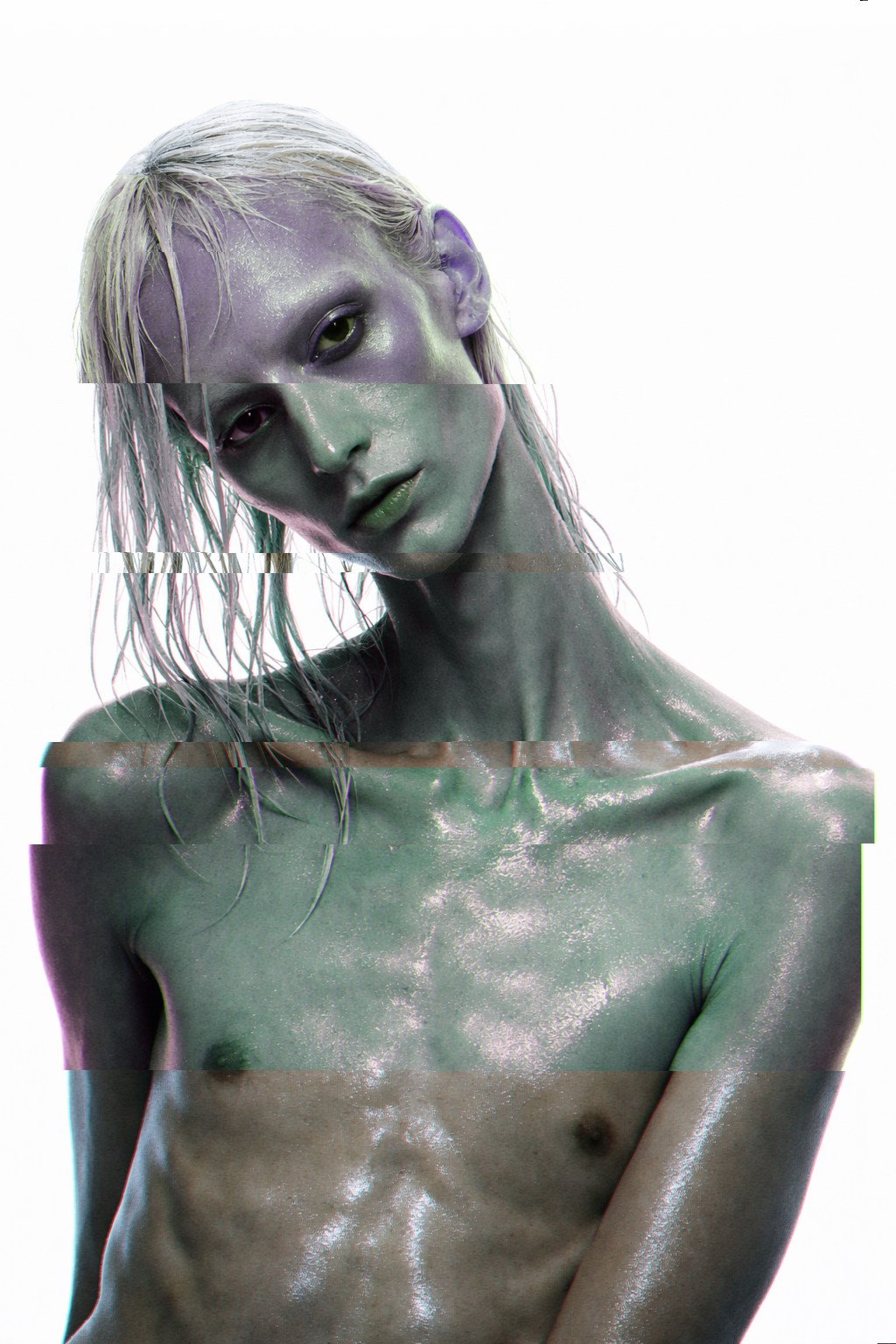
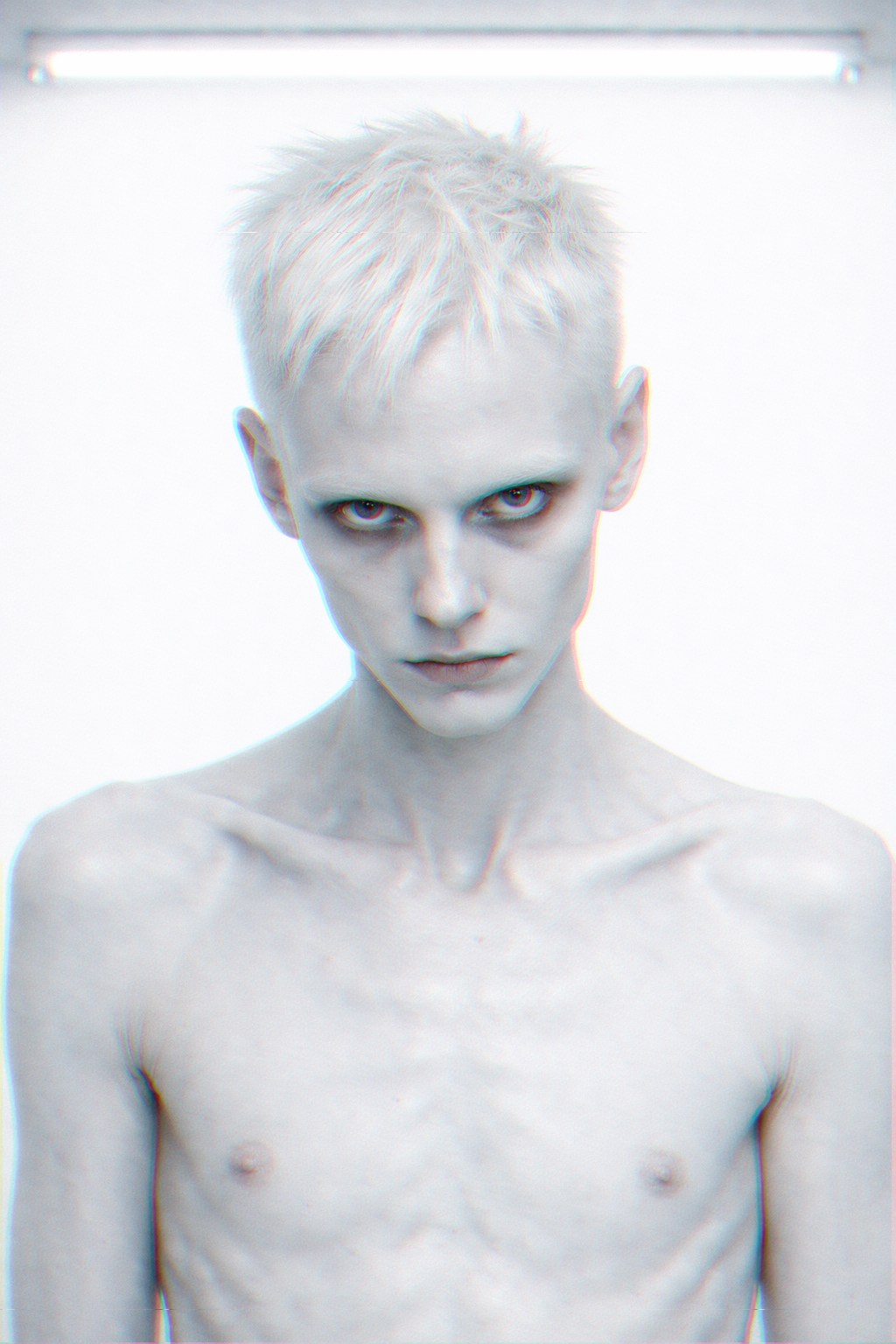
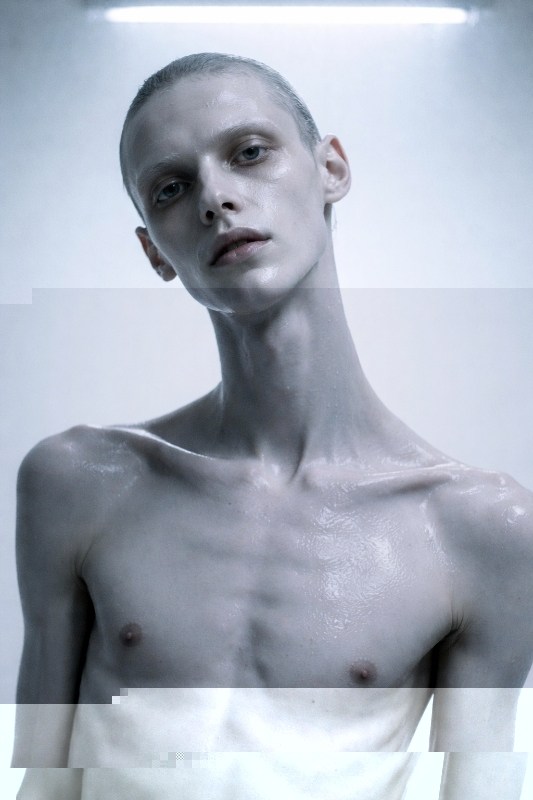
The hand no longer takes the picture. It picks from what the program allows. No breath. No body. No moment. Just words addressed to a machine describing a room that was never built.
SIMULACRA
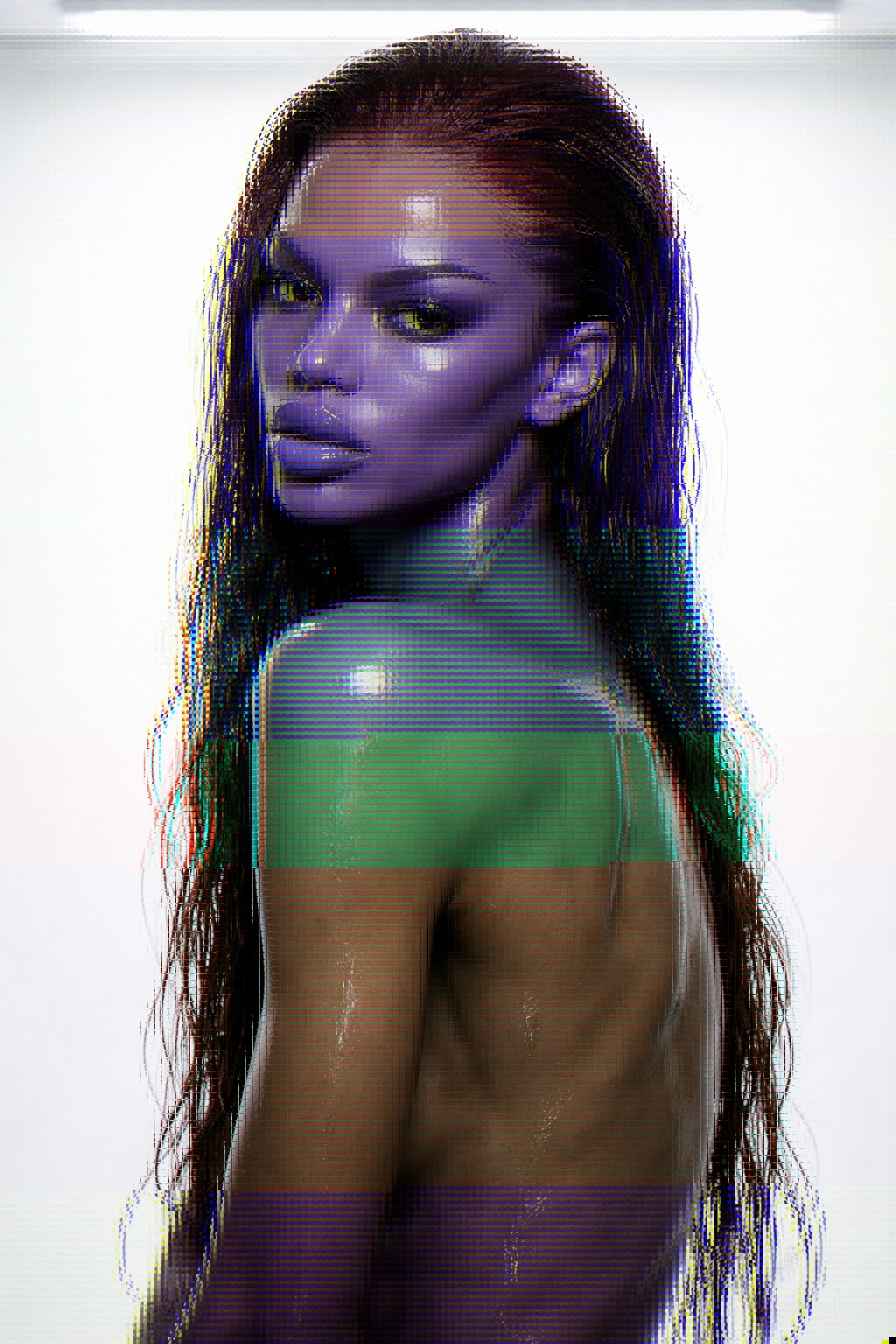
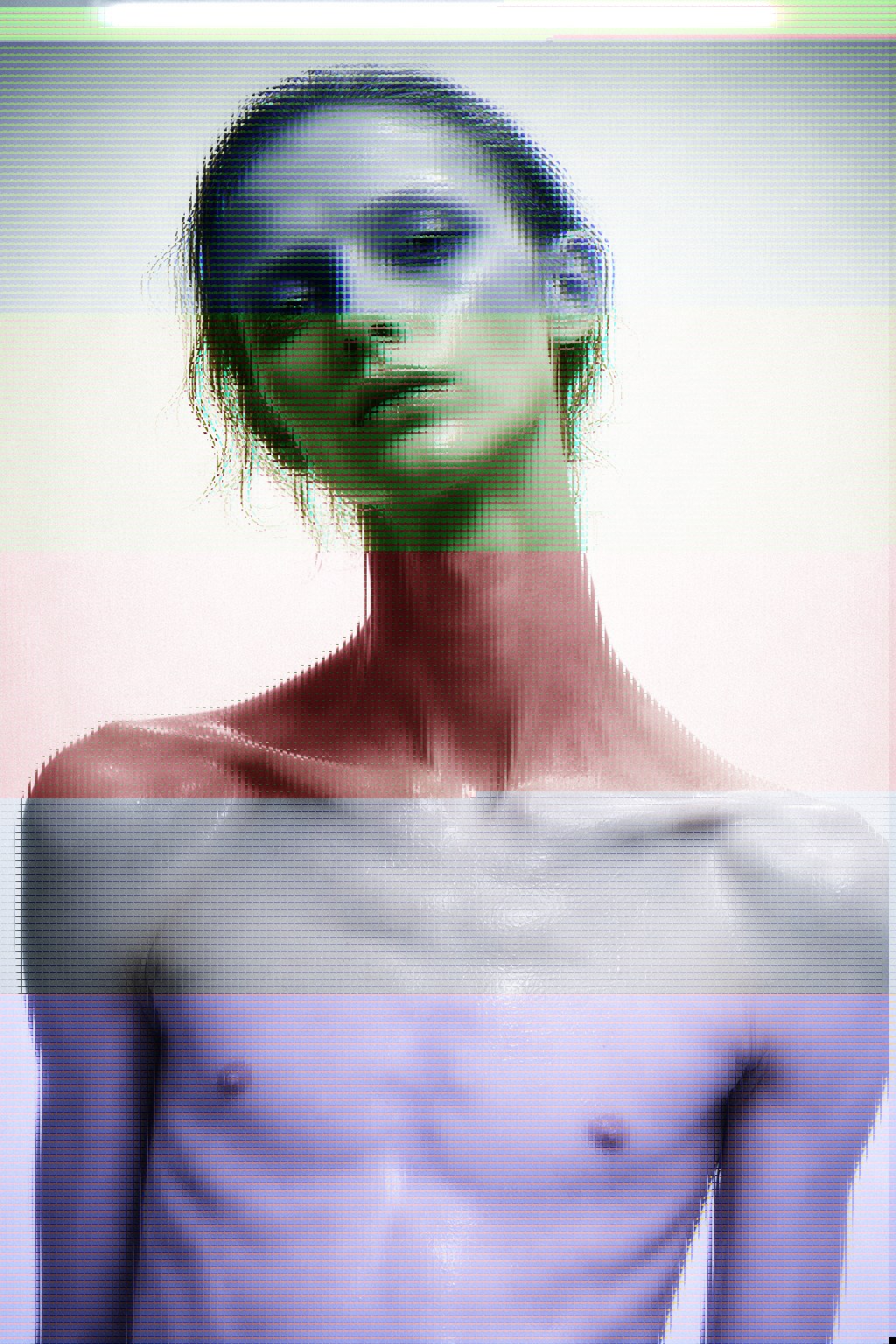
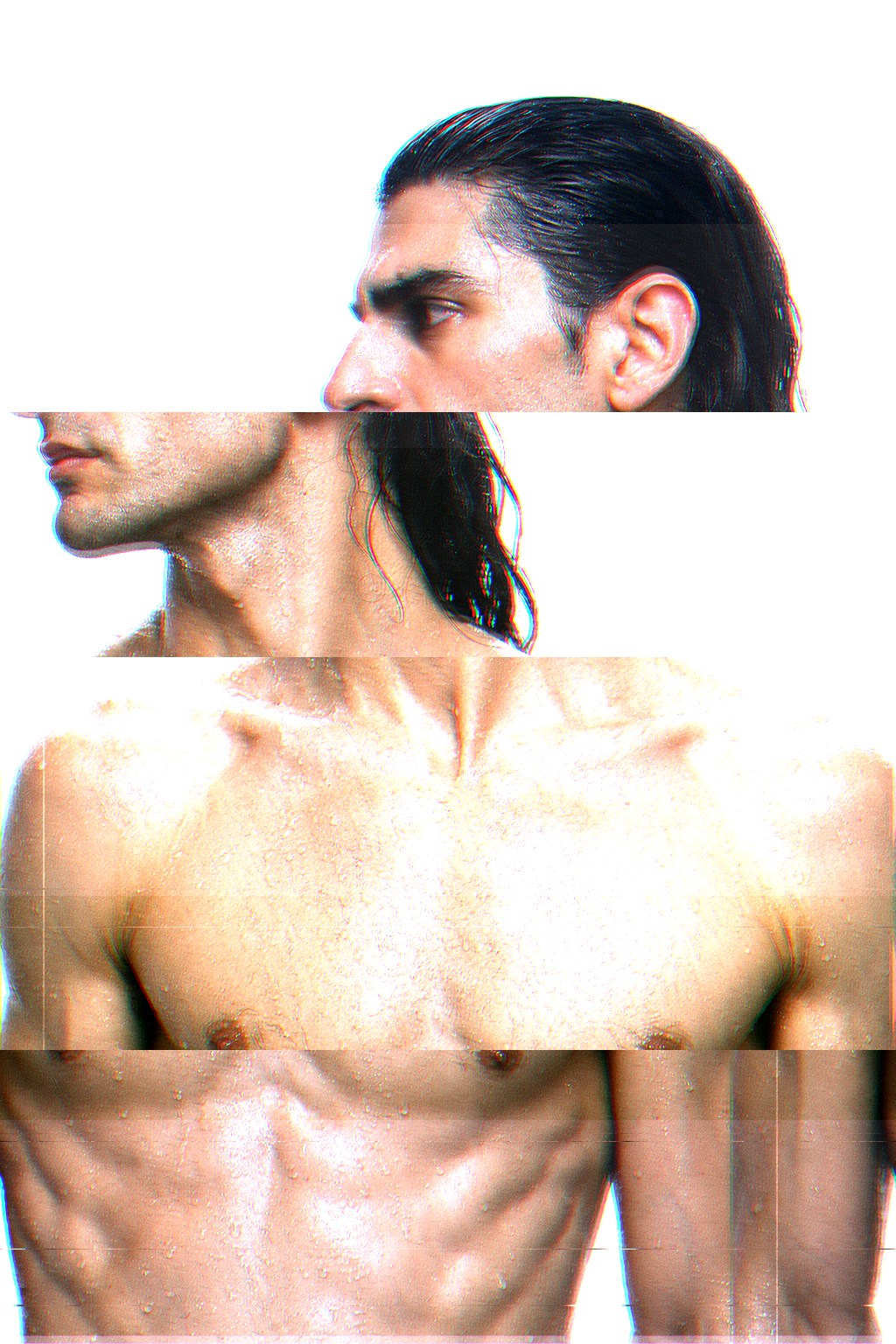
The sign no longer points to the real. It takes its place. The simulation is complete when you stop asking what it simulates. I haven't stopped.
NO CONTACT
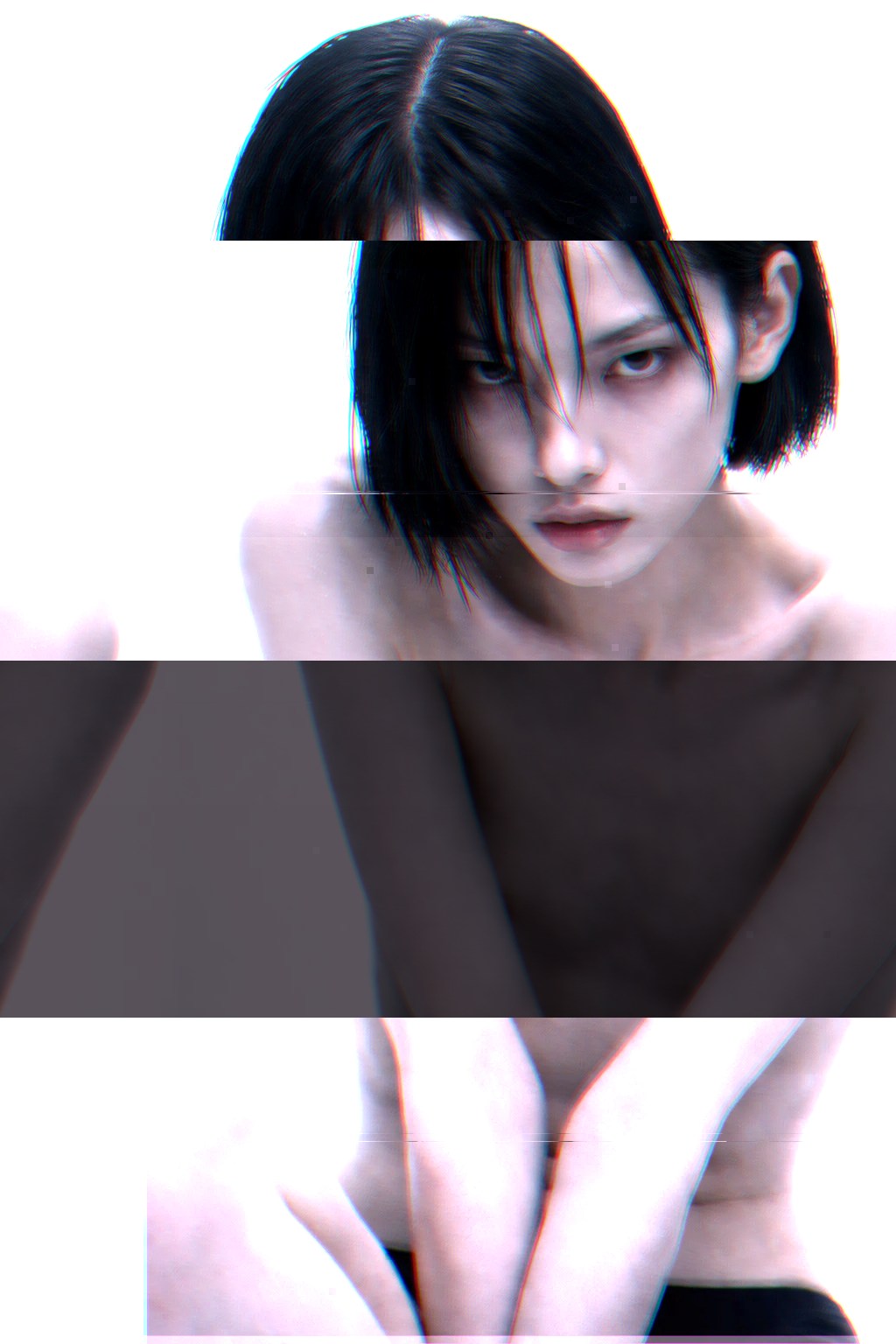
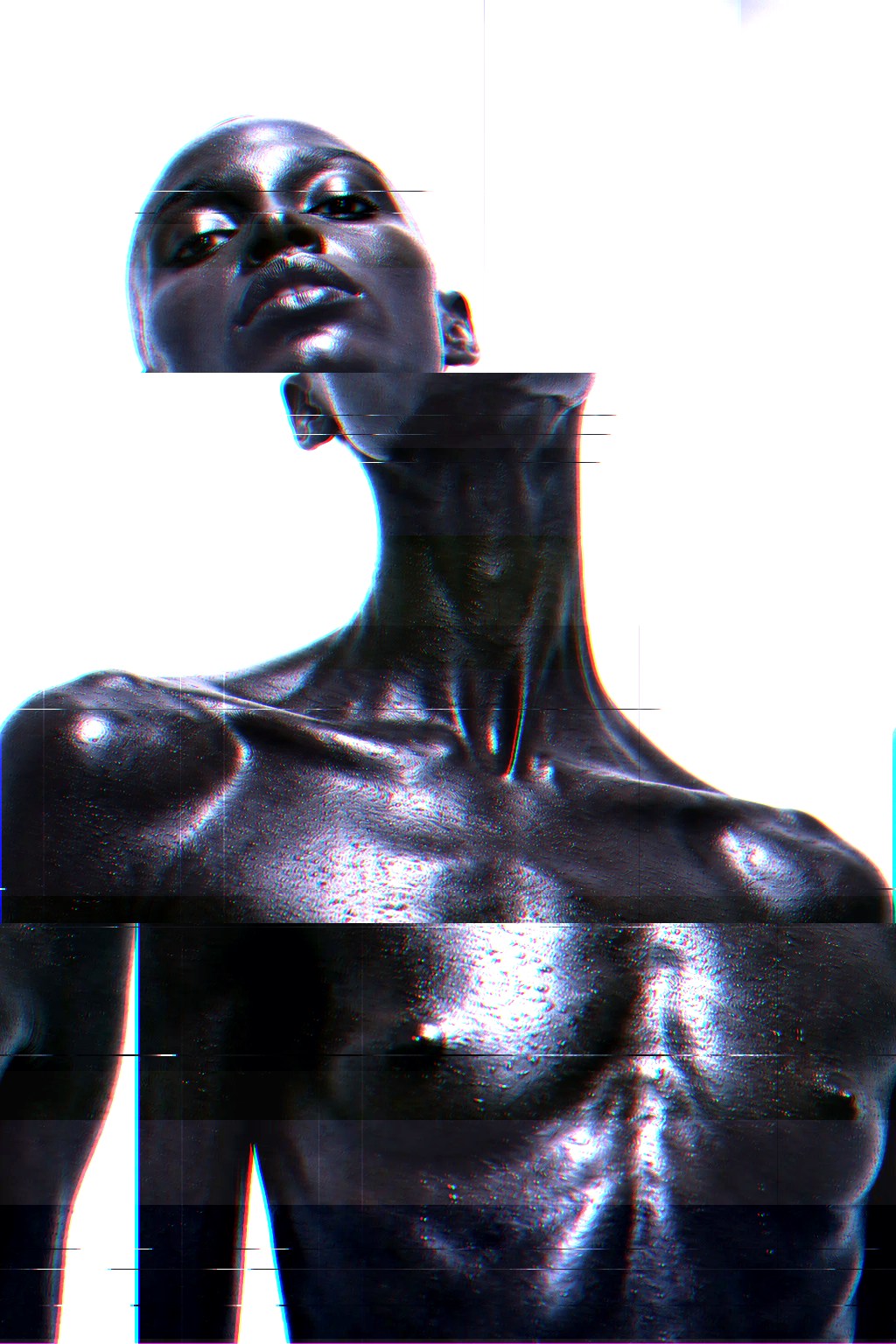
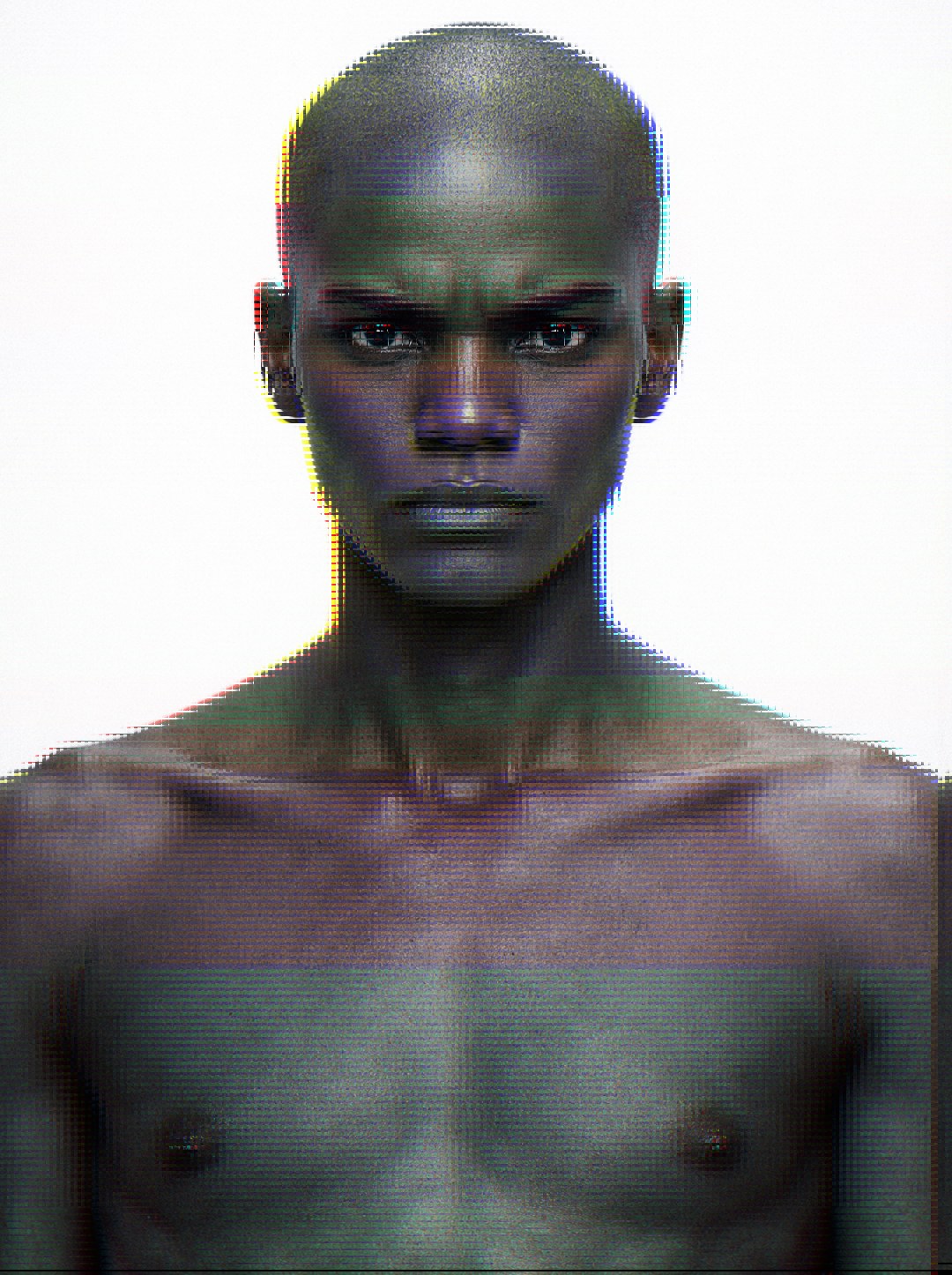
A photograph was a trace: light touched a body, then touched the film. It has reproduced every sign of contact. No contact was made.
THE CONDITION
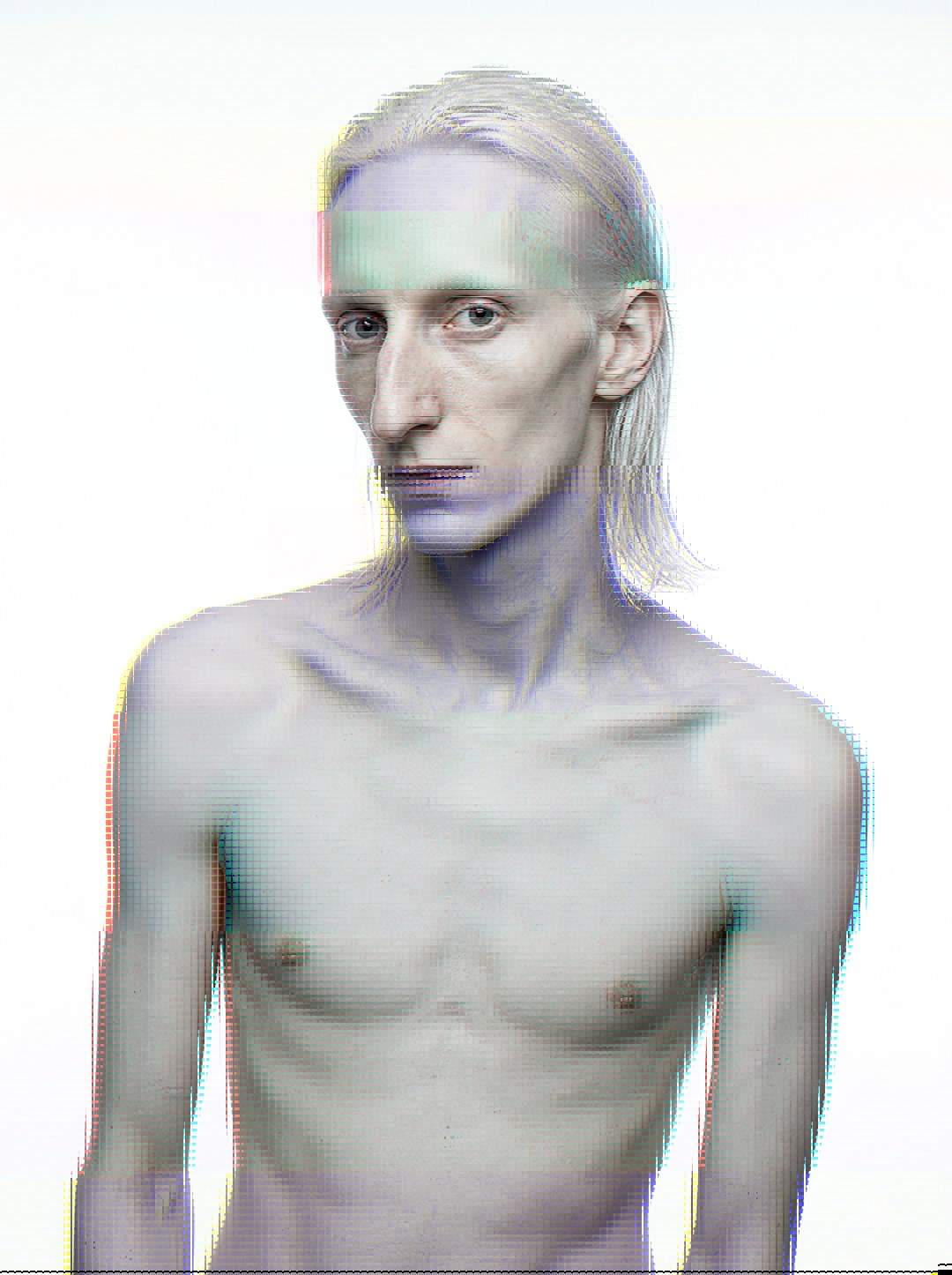
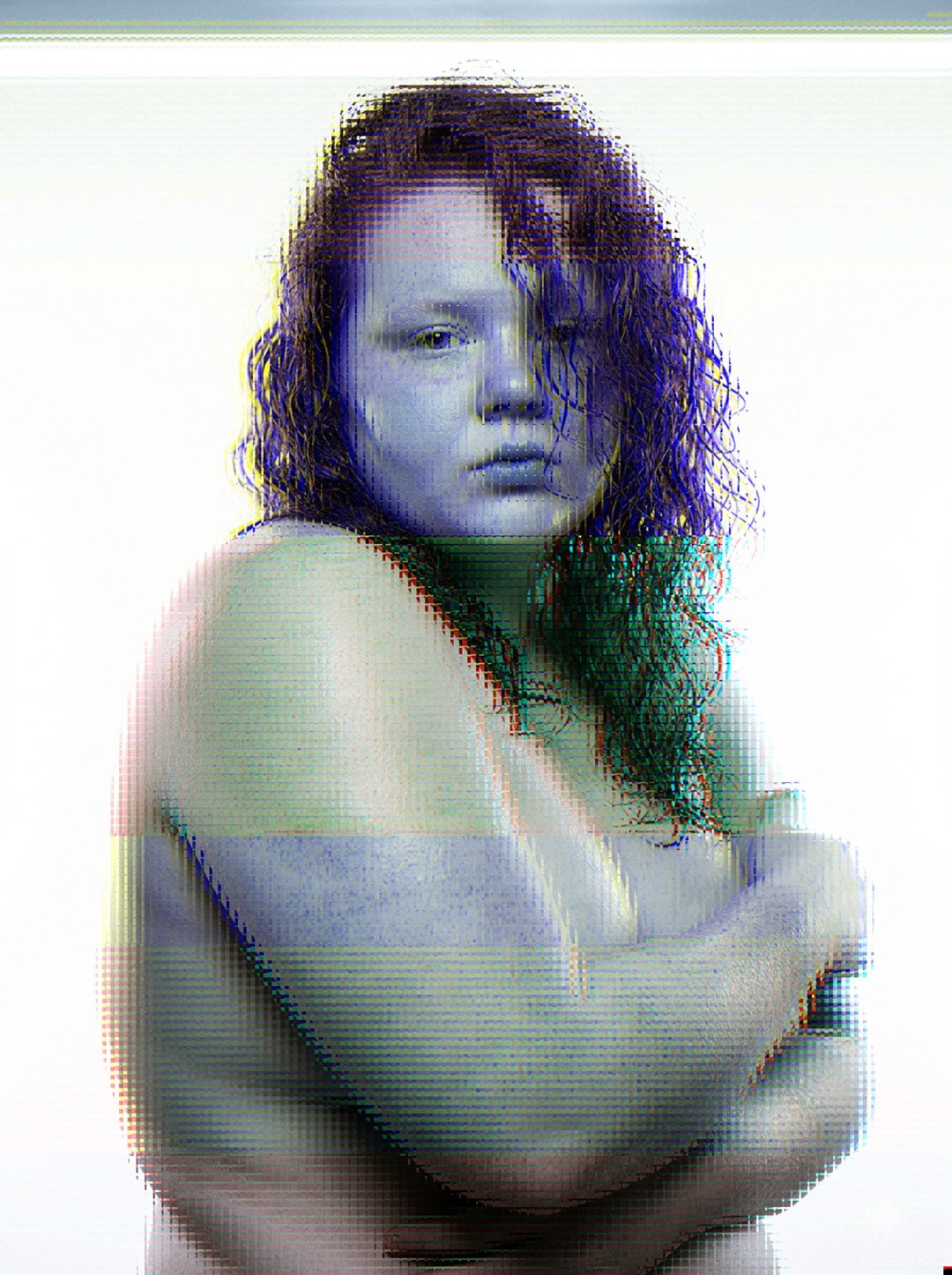
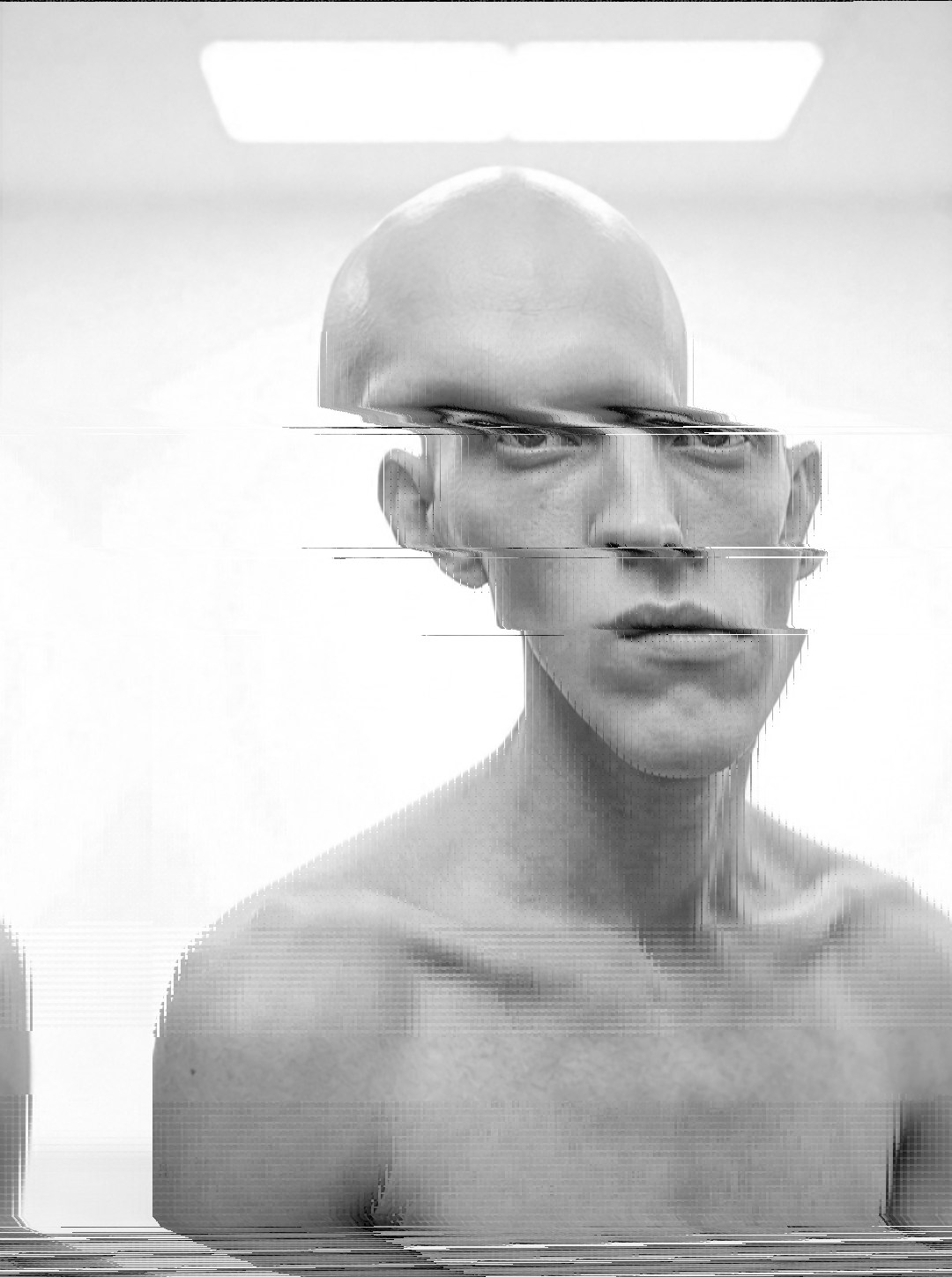
We don't generate the glitch. We don't generate the image. We put the machine in the condition to generate one.
THE BODY IS NOT A GIVEN
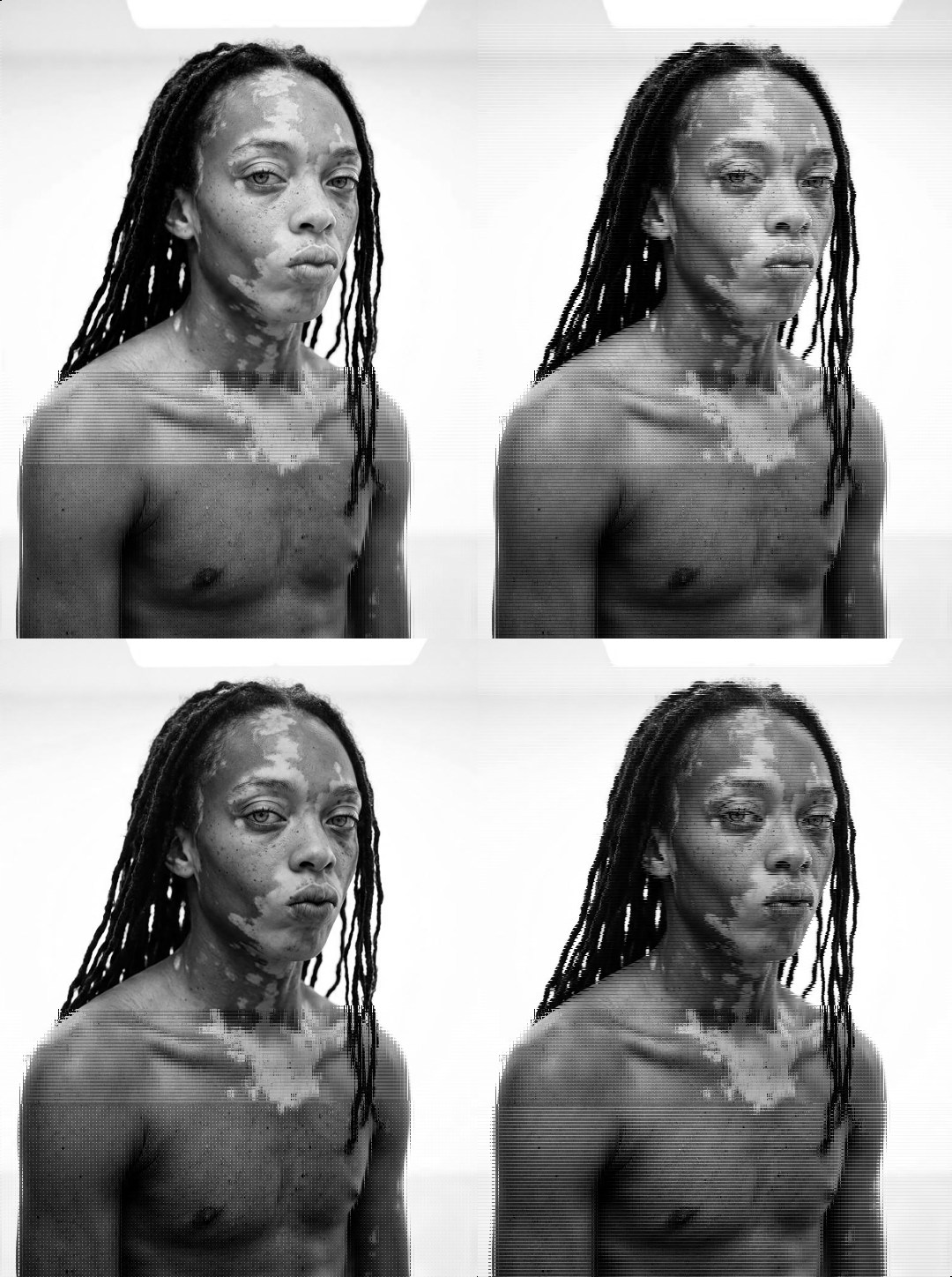
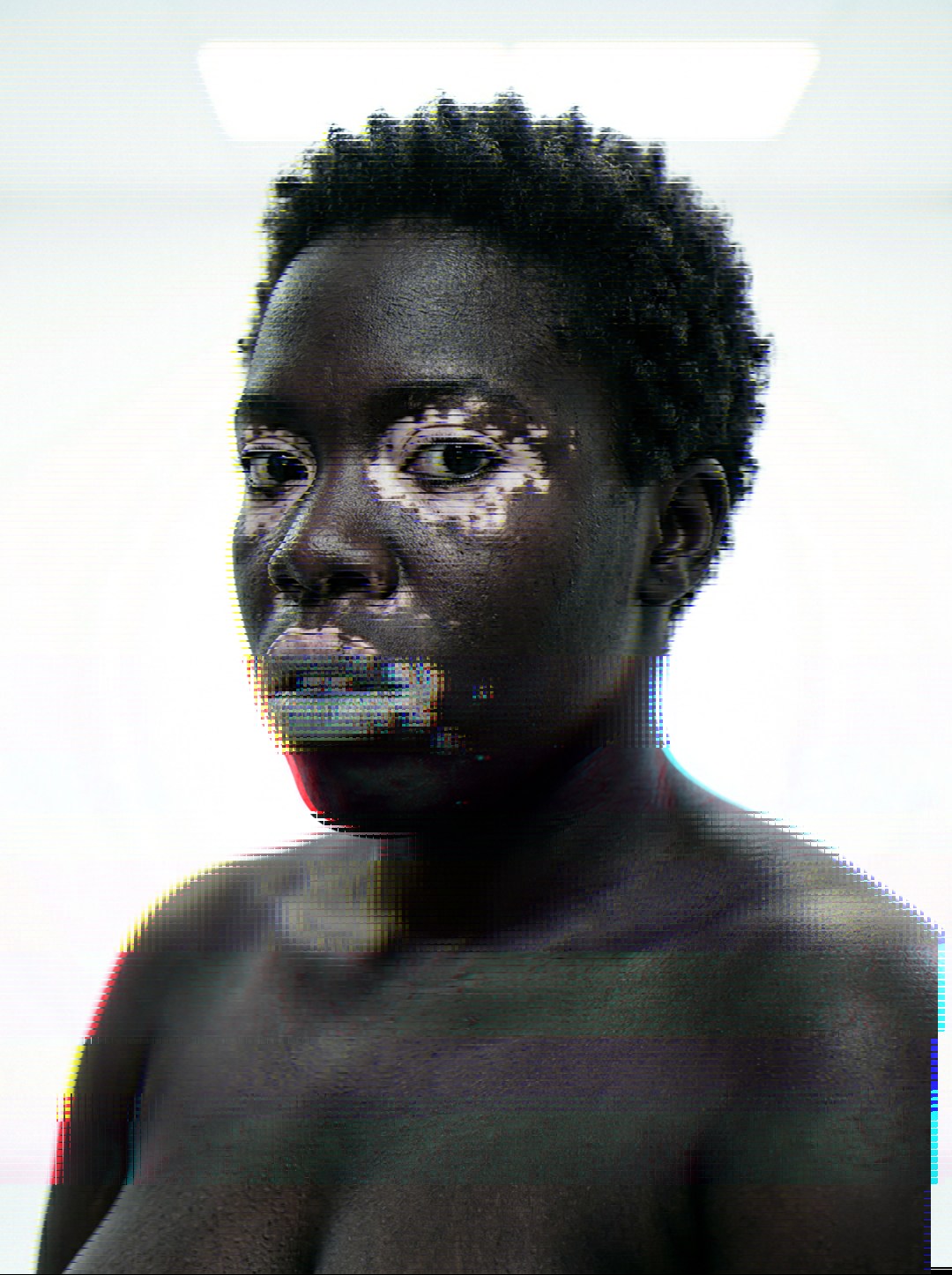
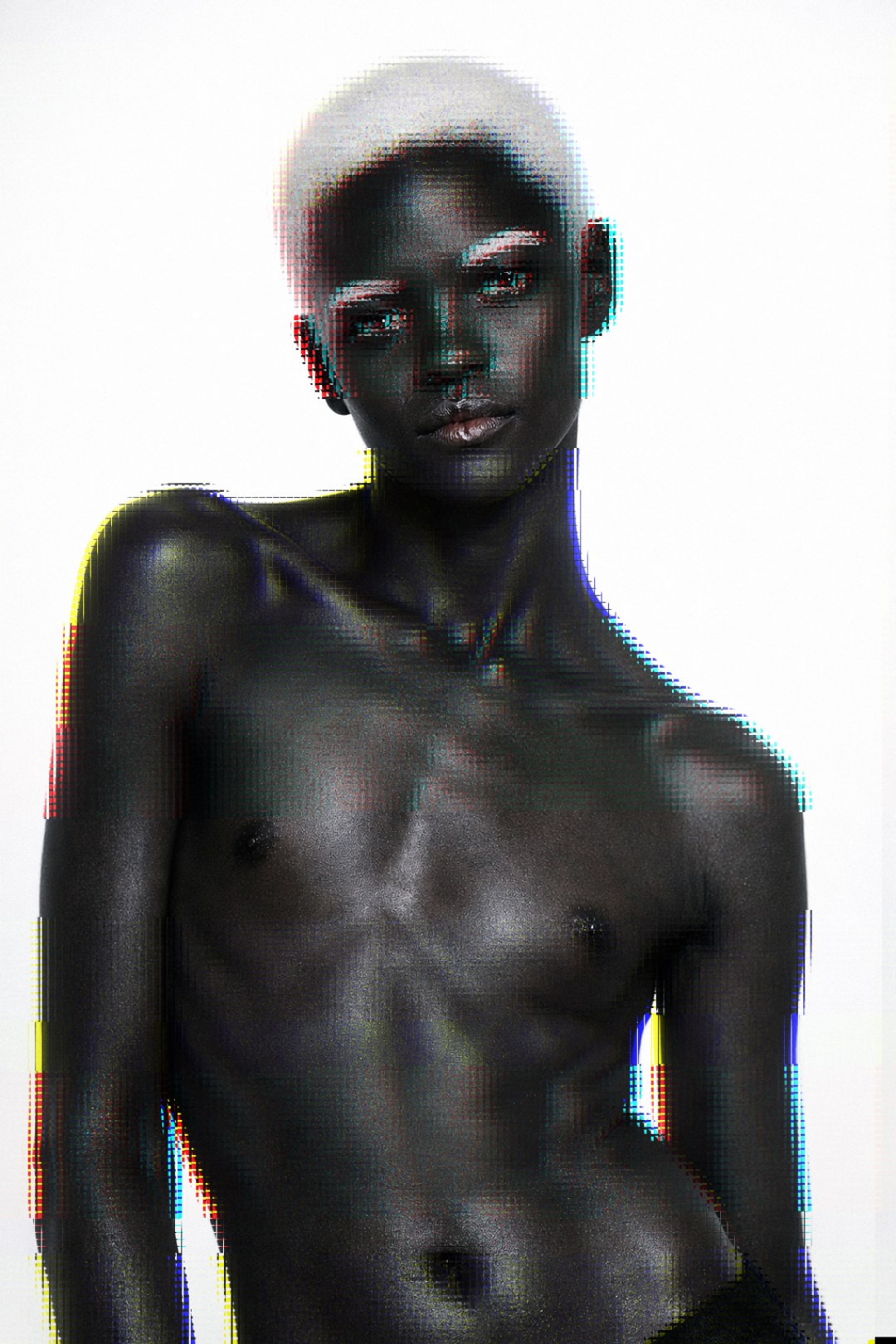
The body is not nature. It is built, dosed, updated. The final version of a face that never had a first draft.
THE OPTIMISED BODY
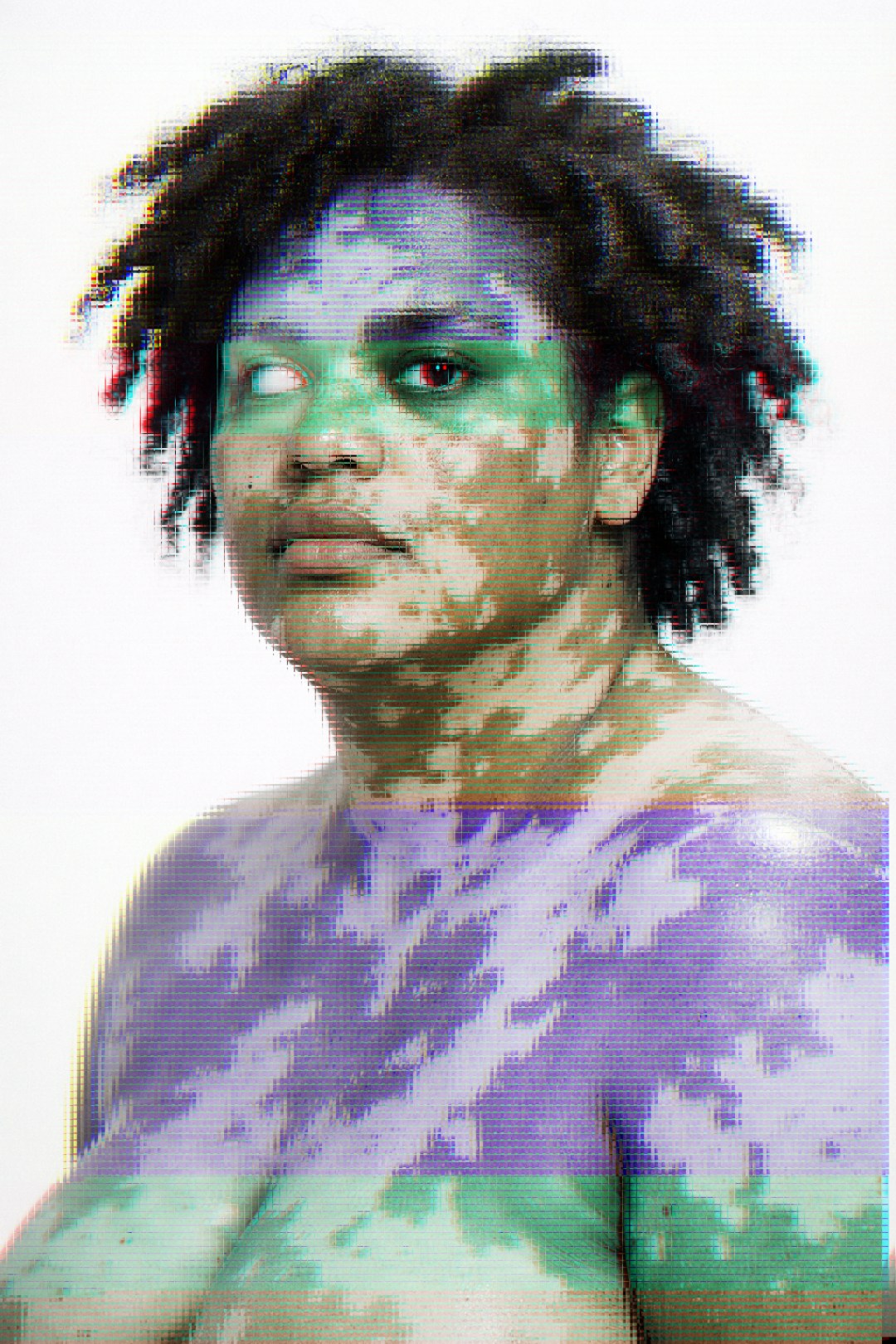
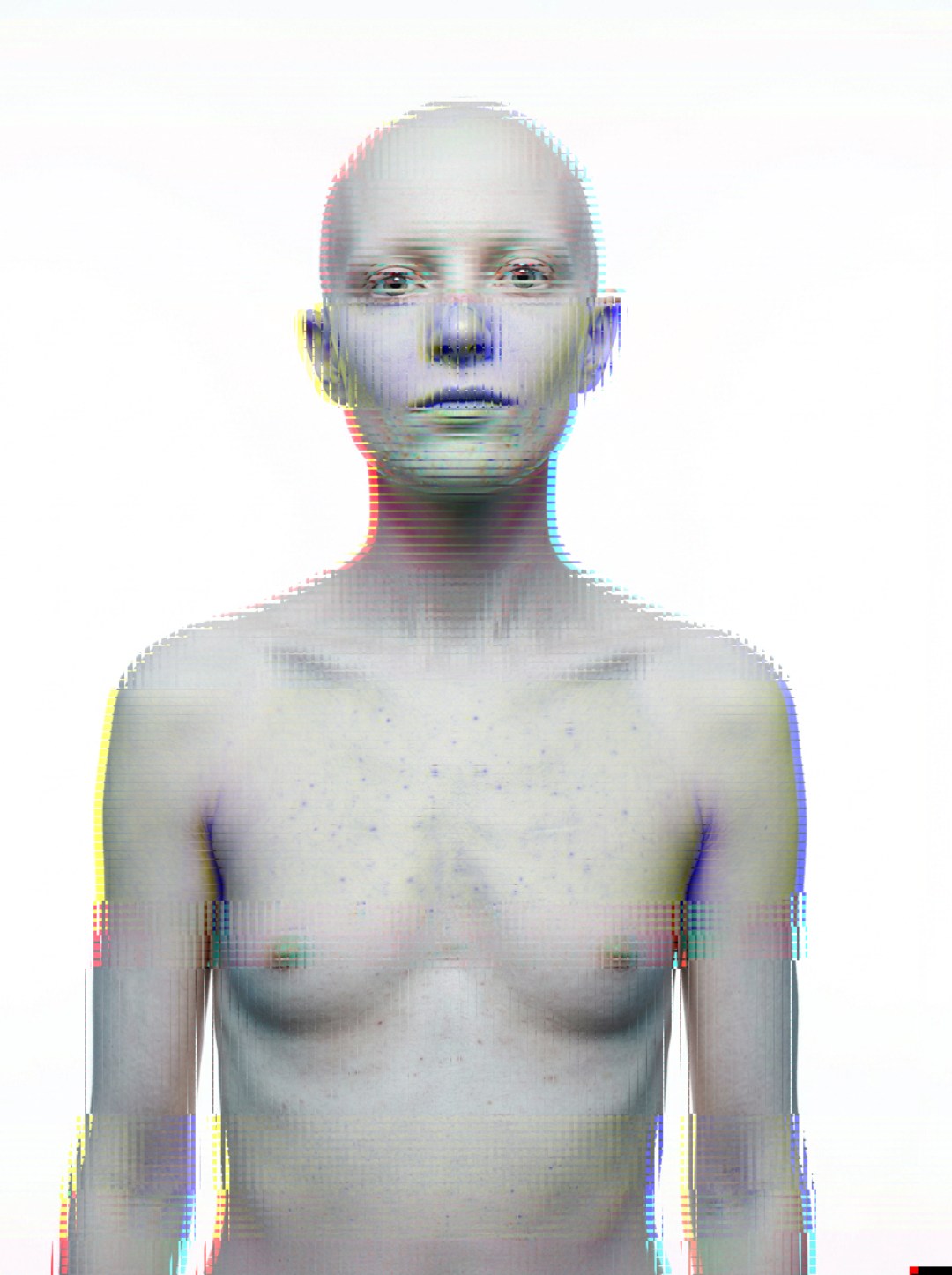
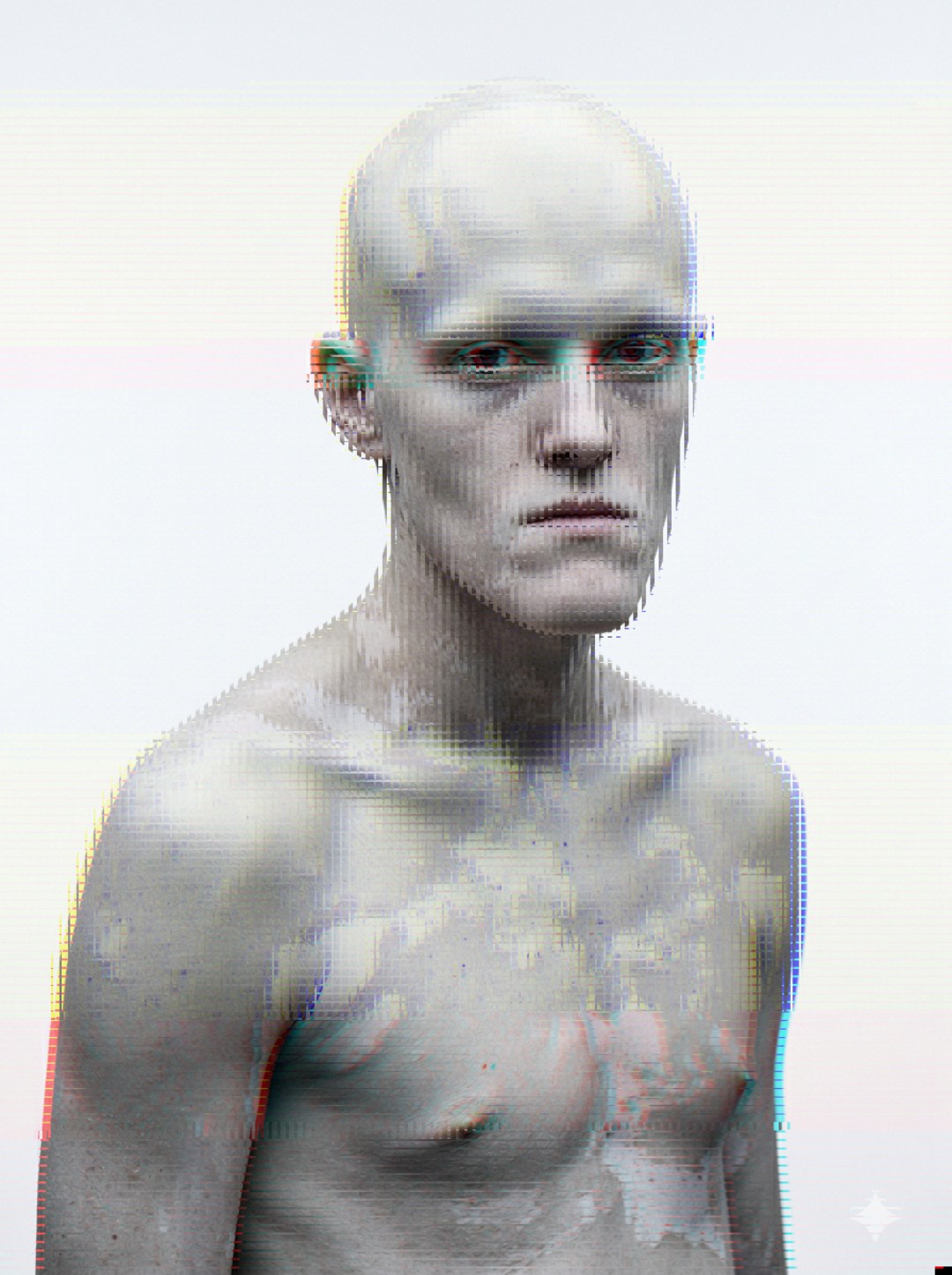
Anatomy becomes grammar. Cosmetics, its argument. No anaesthesia. No recovery. No risk. The optimised body produced in one gesture.
MEMENTO MORI
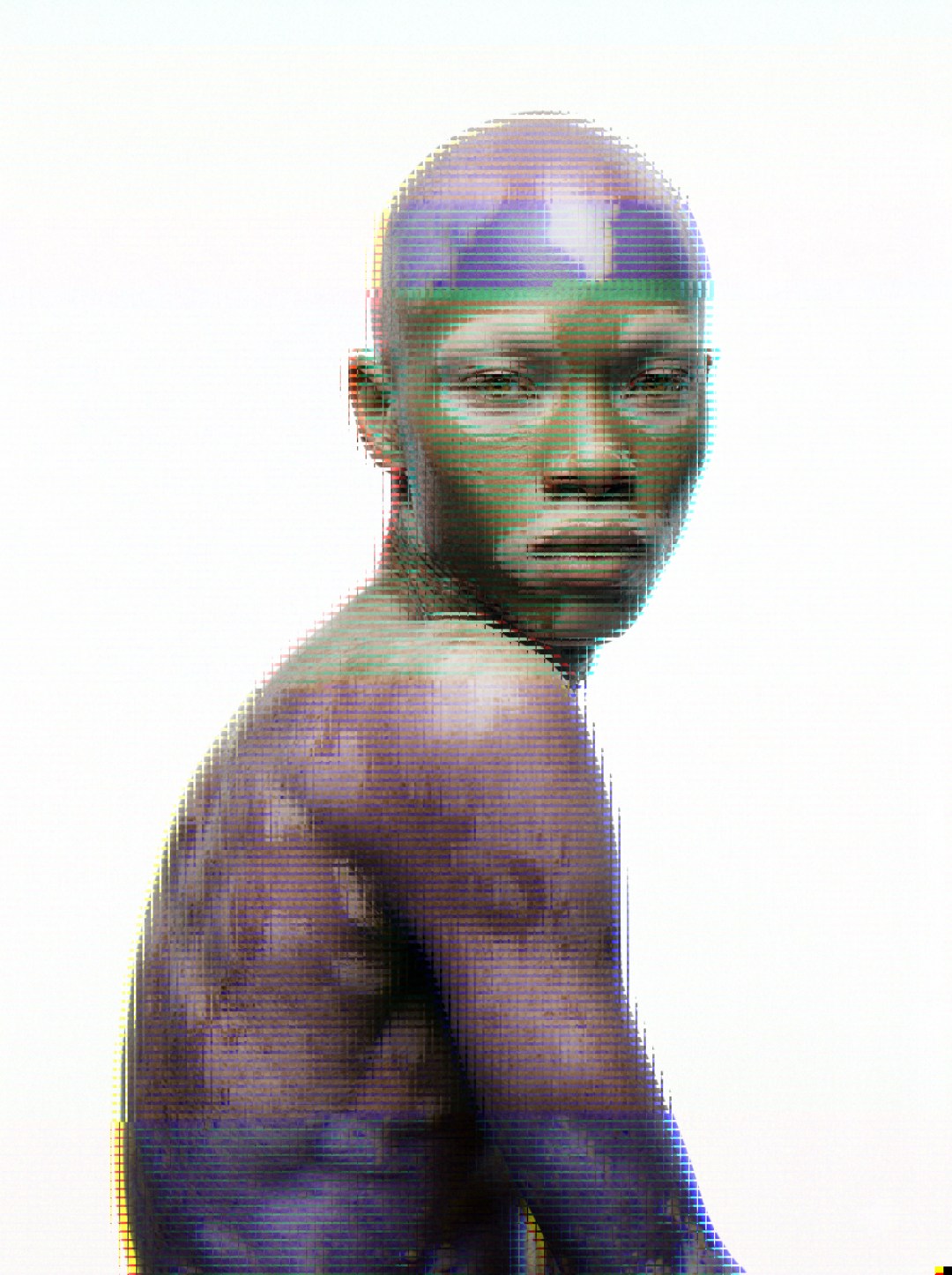
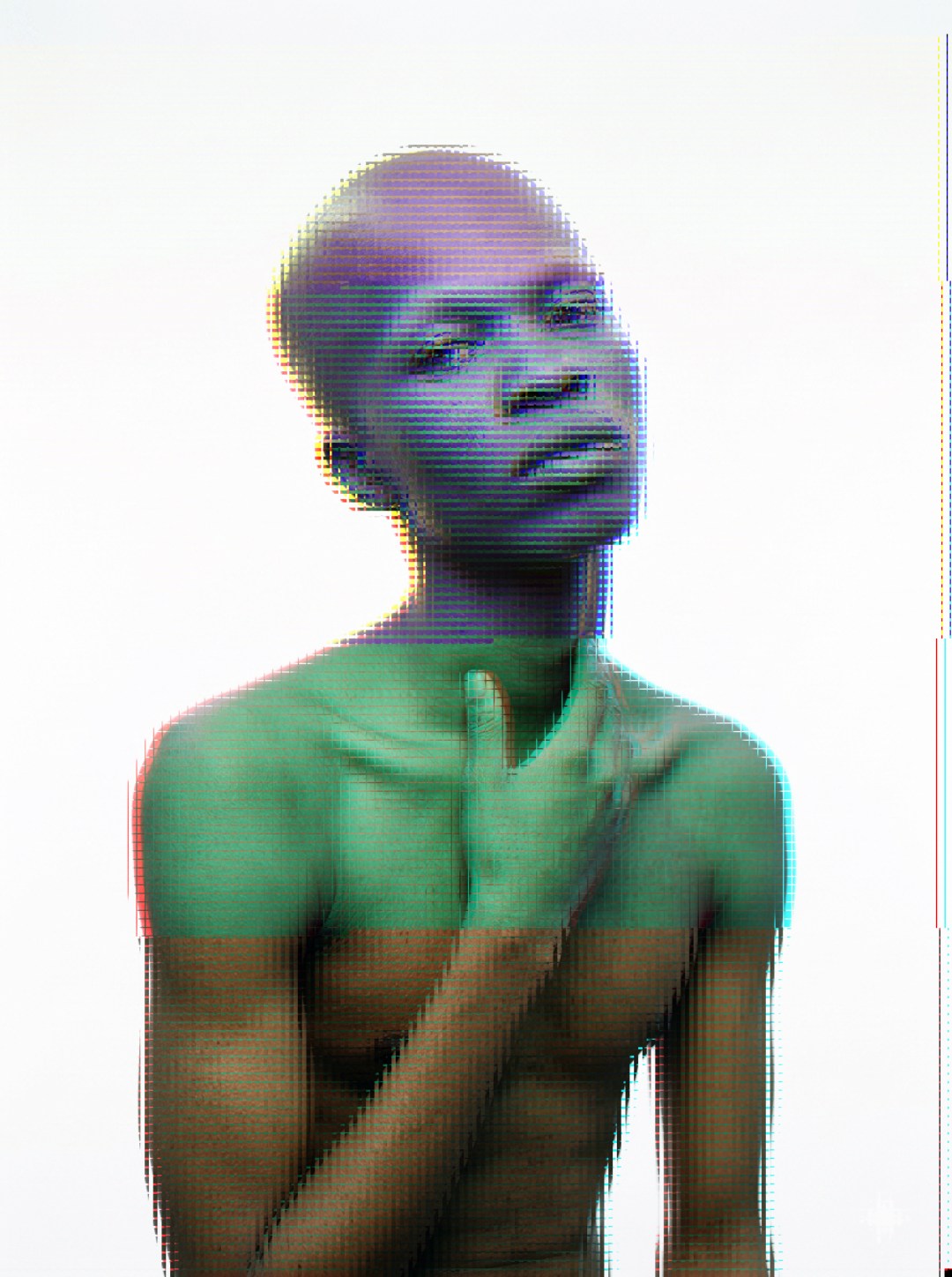
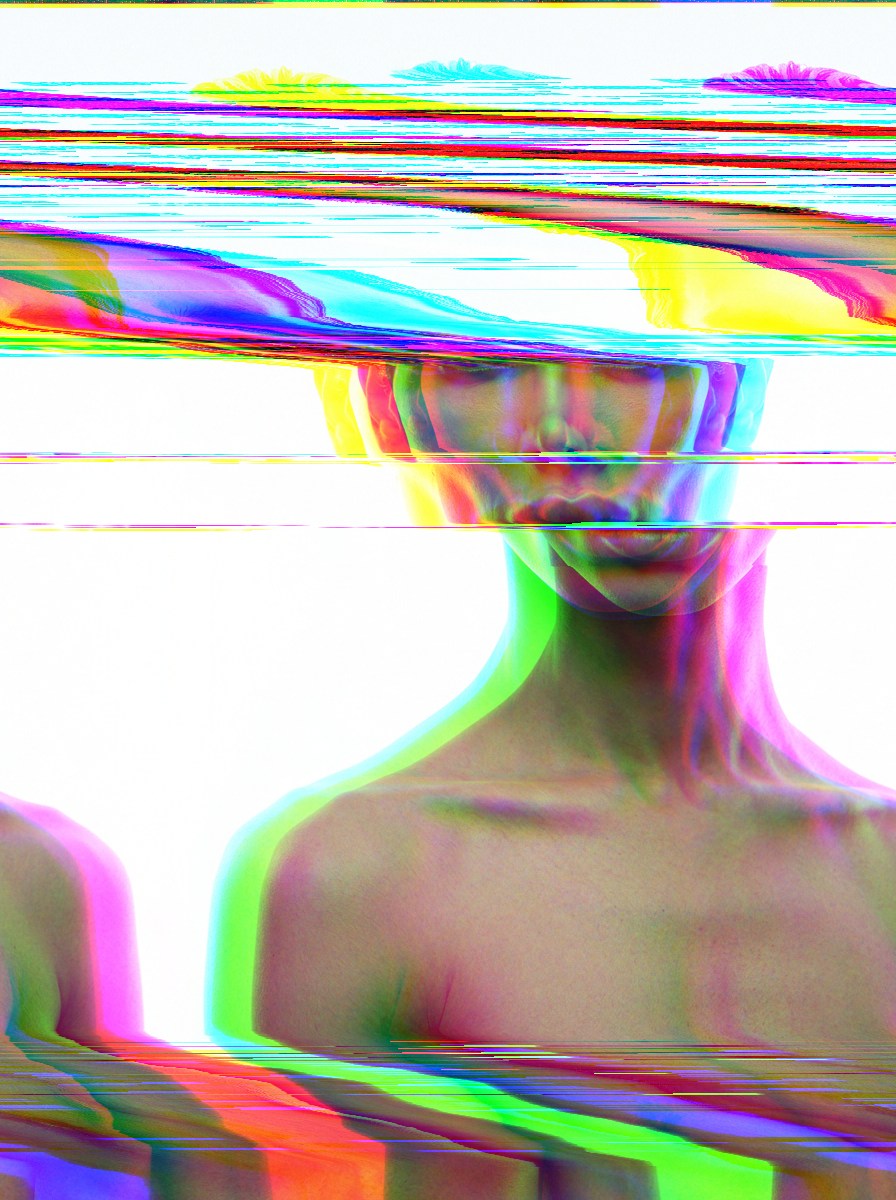
Every photograph is already a goodbye: this was, and will not be again. A funeral for no one. A grief without object. A face you will remember that you have never met.
THE BODY AS CURRENCY
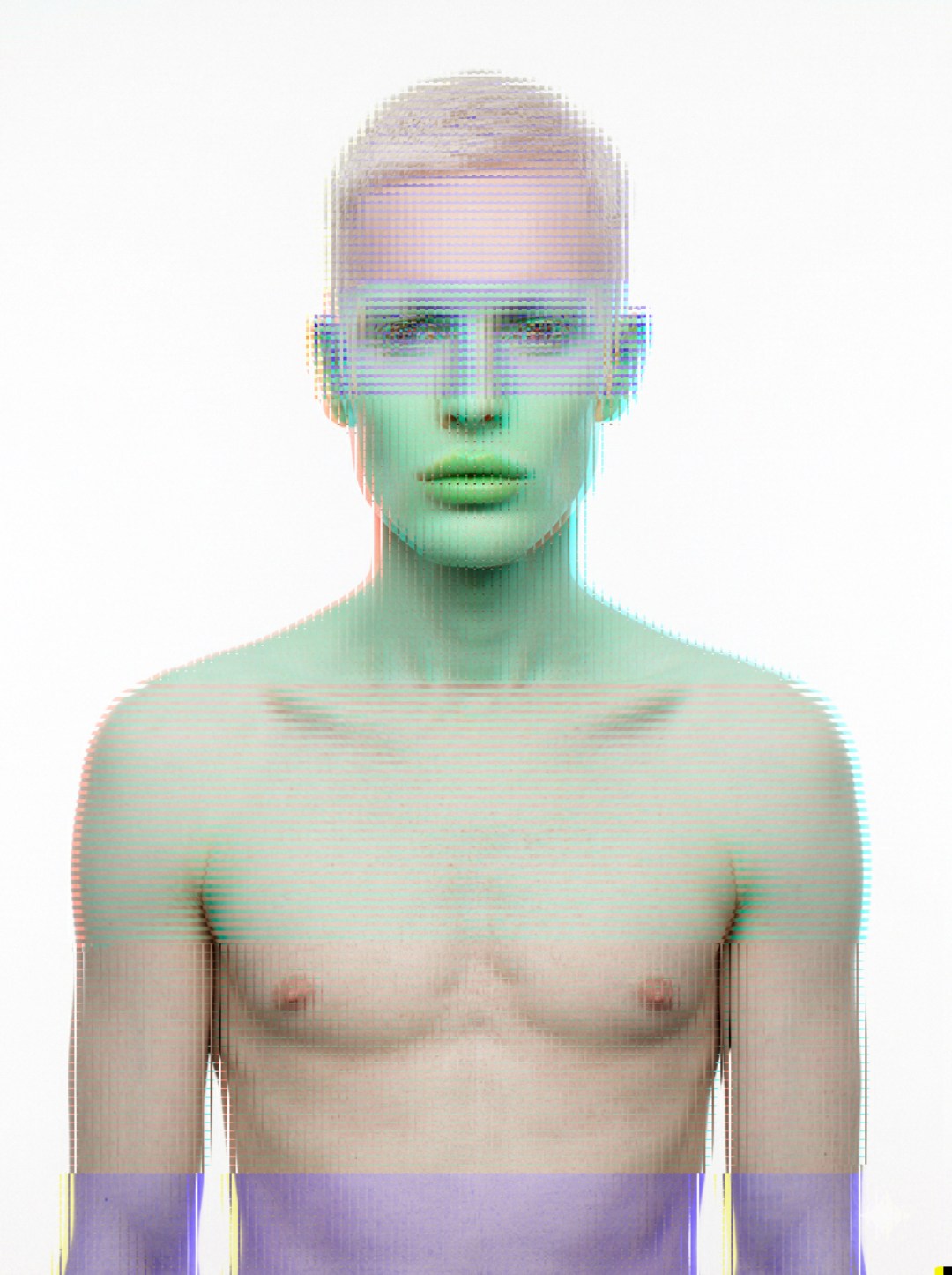
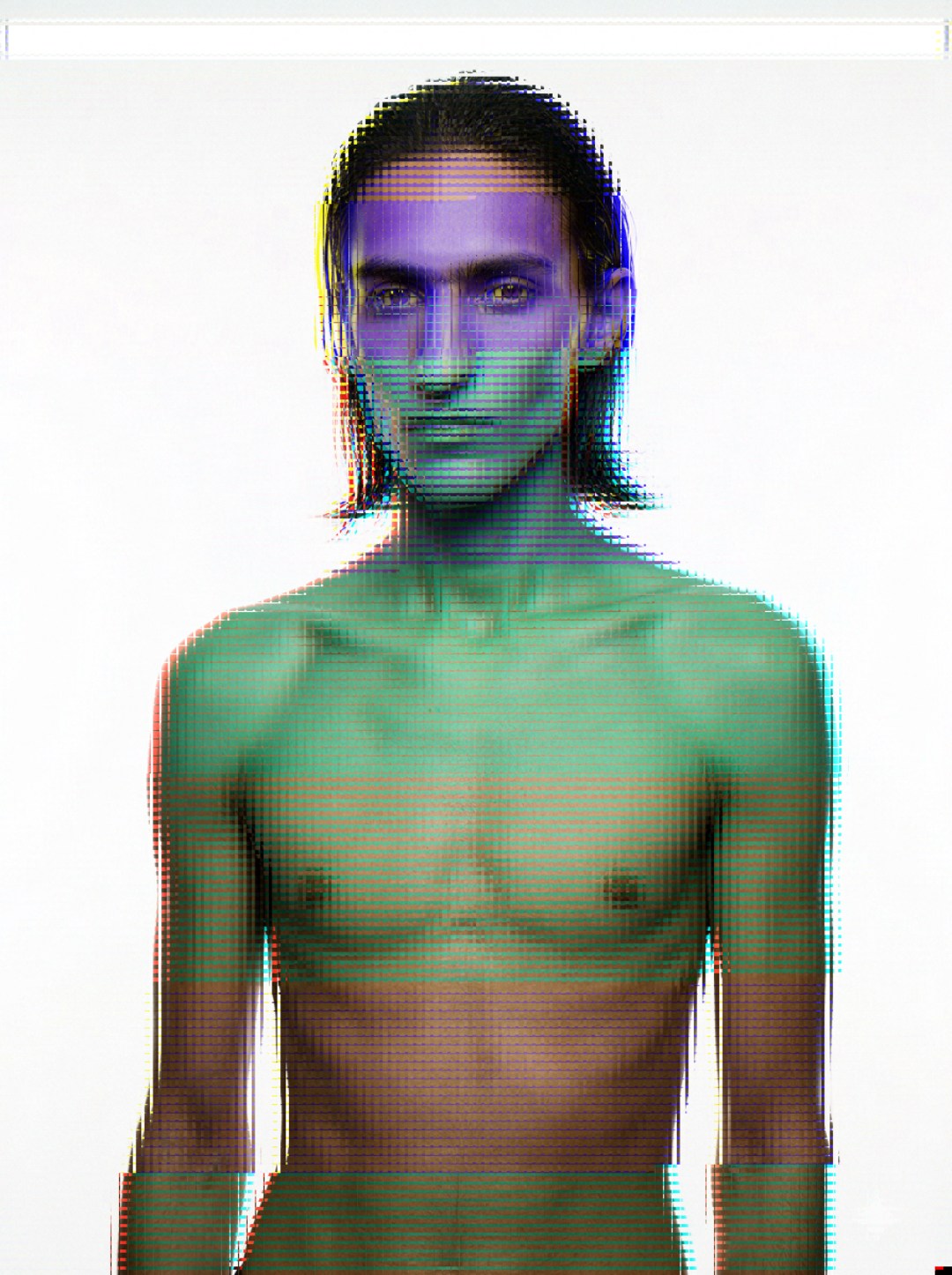
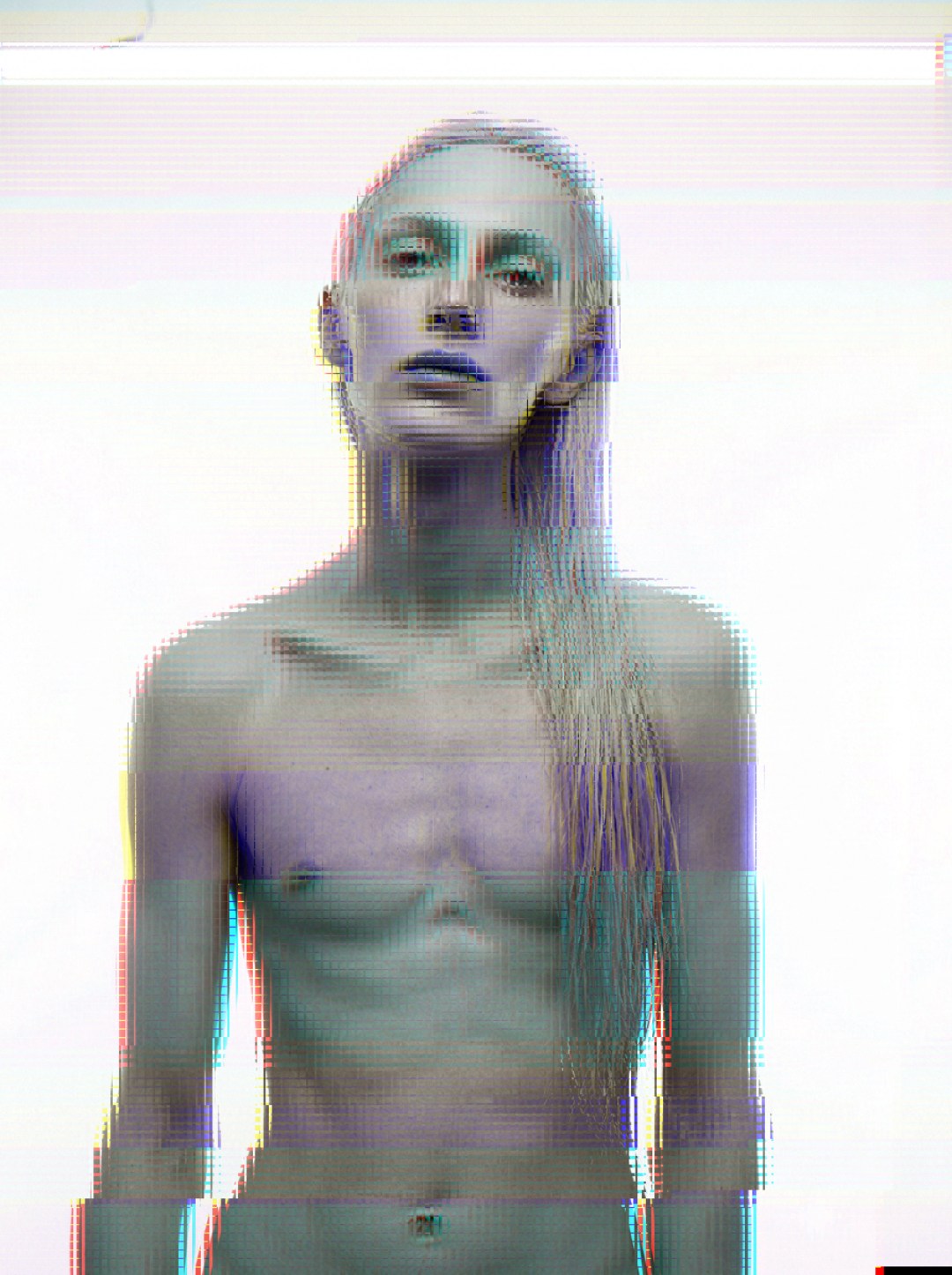
Beauty, smoothed until nothing different is left. The imitation started being imitated. Our flesh is absorbing the geopolitics of beauty.
THE GAZE WITHOUT AN OBJECT
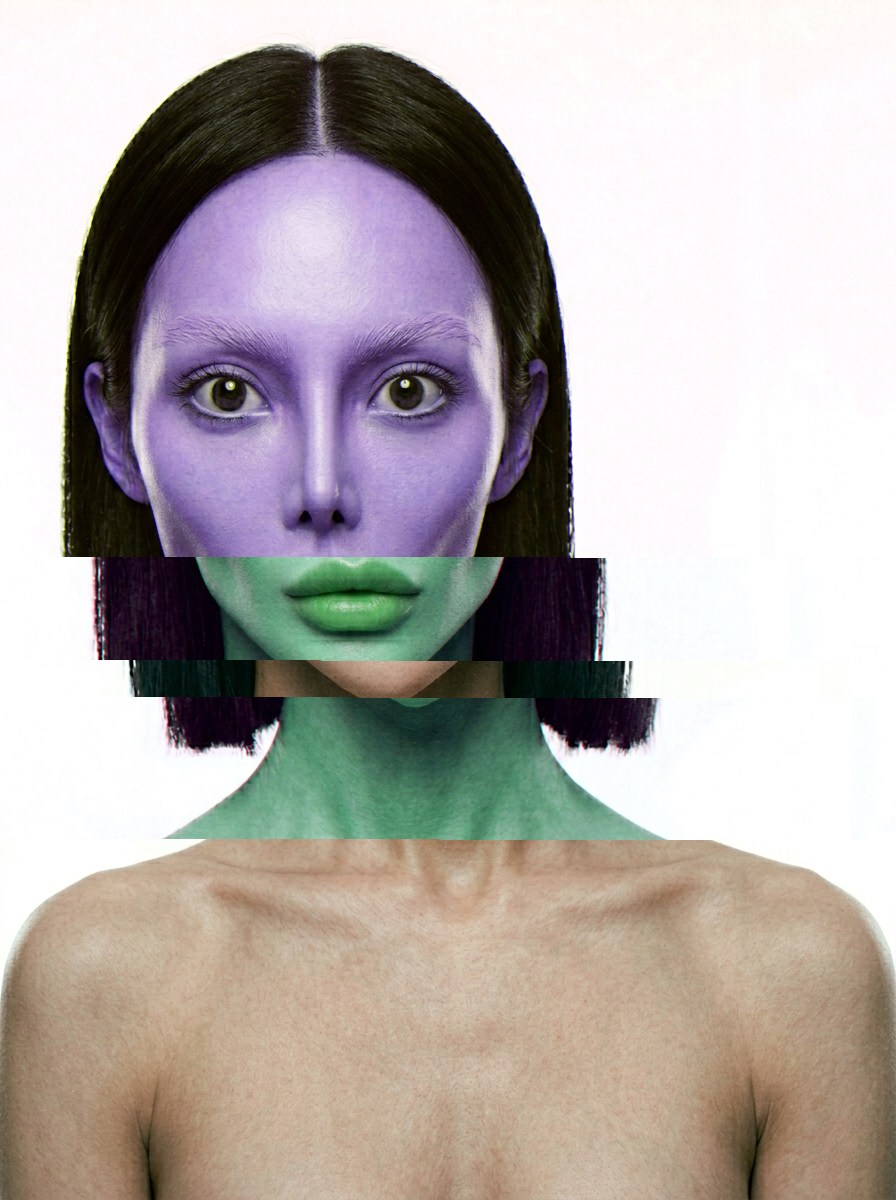
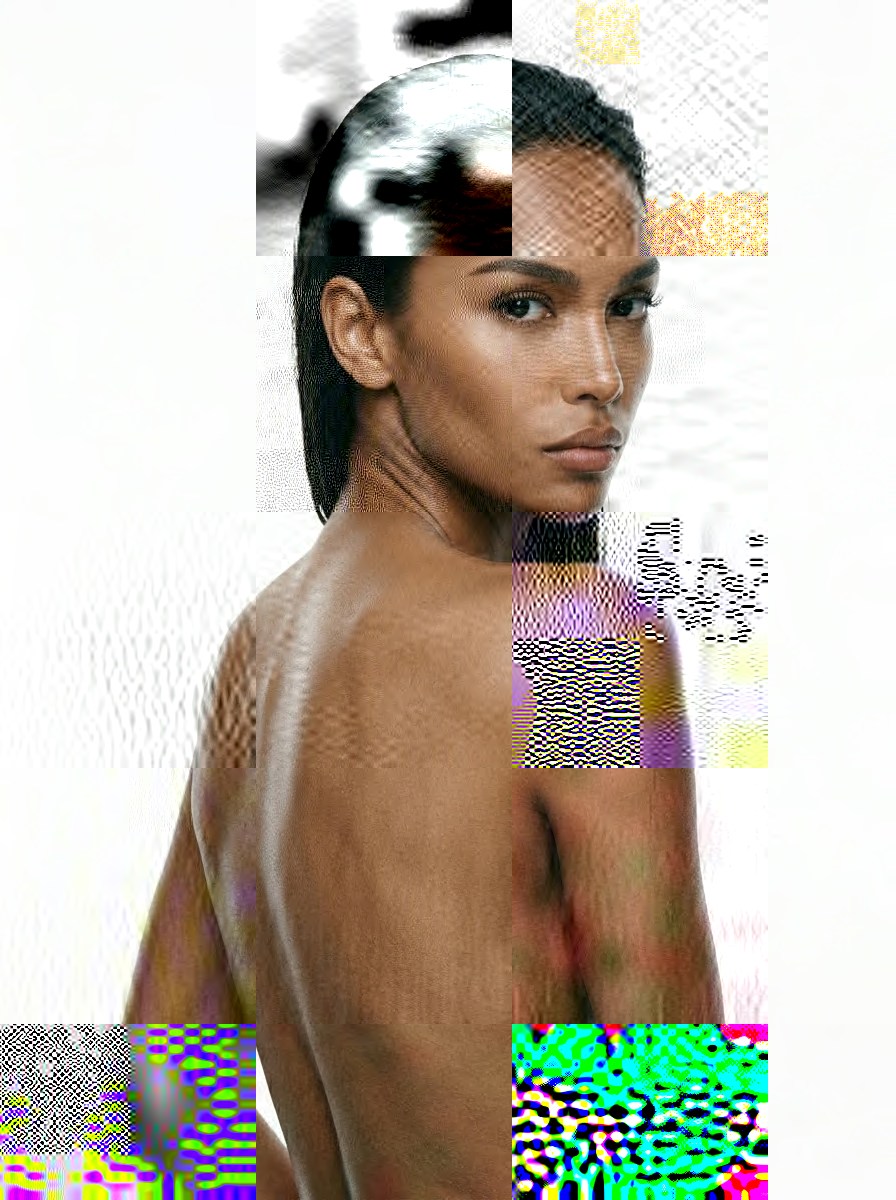
A gaze that shapes what it looks at, until the body is nothing but its object. The body was never the point. The point was always the image.
On the method
Subjects generated by AI, never photographed, never in front of a lens. Then glitched with hex editors and my own custom file-format editor, bending the data: broken pixels, shifted blocks, corrupted files. In a synthetic image the glitch does not expose the fake; it gives it a history, the mark of something stored, damaged, passed on. Each image is published with its text; longer texts live on the blog. The glitch, once again, marks the thin line between the real and the fake.